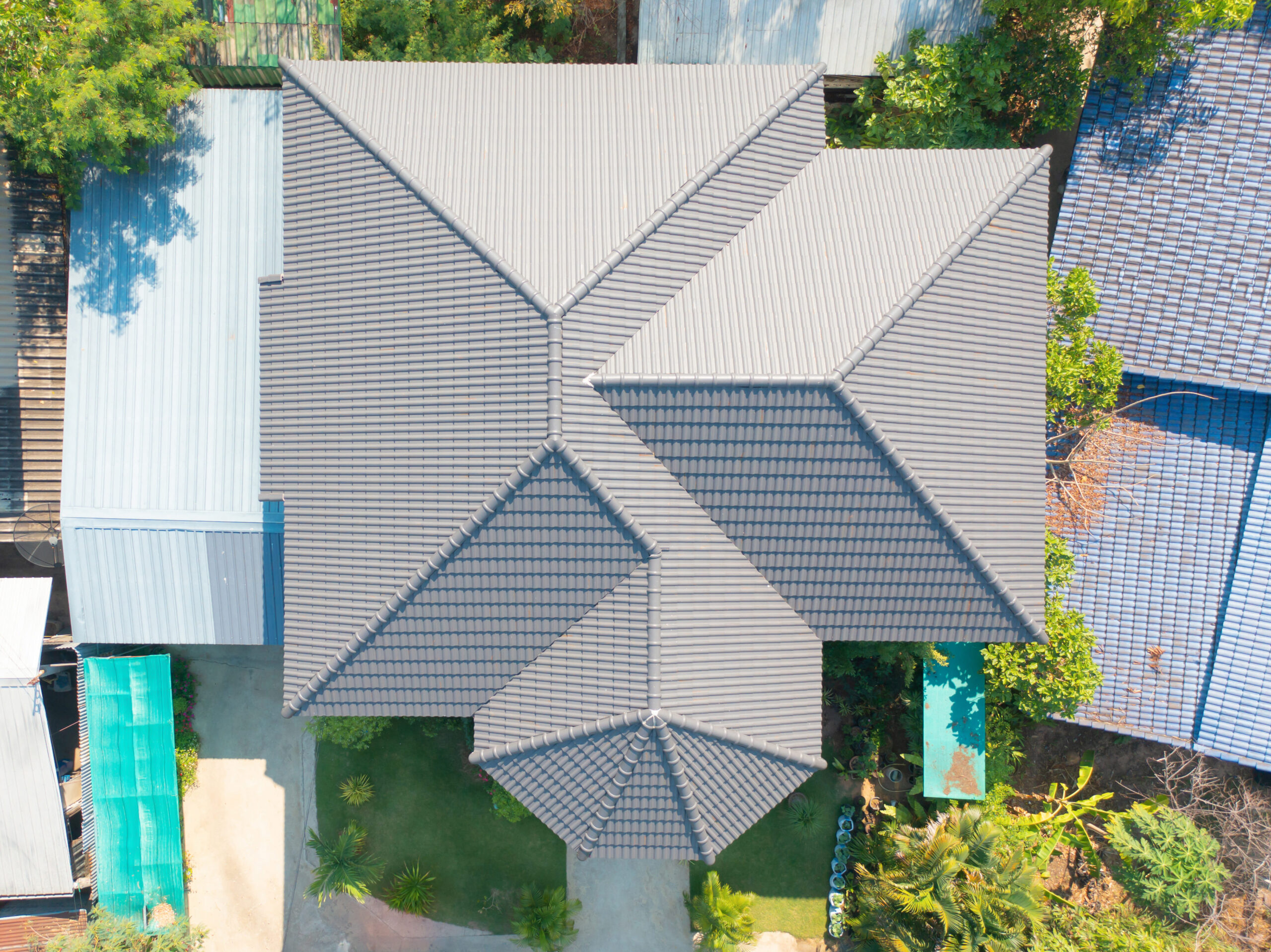
Thinking about what is a hip roof? Have you ever seen a house with a roof that slopes on all sides, and comes together at the top like a pyramid? That is a hip roof. It is a traditional design with all four sides sloping down to the walls, which makes the roof look sleek and balanced.
This kind of roof is extremely sturdy and thus it is ideal in homes that are located in regions that experience extreme weather conditions such as strong winds and heavy rains.
Imagine a house in Houston, where storms are frequent. A hip roof may offer you the protection you require. It is made to repel water quickly and resist wind, leaving your house dry and secure.
Understanding the Design of a Hip Roof
A hip roof is robust since it consists of multiple components that interact. The roof begins with a central ridge beam. This beam falls to the sides of the house through rafters.
The sides where the slopes meet are the hips; hence, they provide additional support. The valleys are the places where the sides come together at an angle.
We have been providing the best roofing services for many years. We construct hip roofs using hard materials like shingles or metal. The pieces are snug, and thus there are no weak points. Hip roofs are liked by people because they have clean lines that are appealing.
A hip roof consists of four major components
- Ridge: This ridge beam is at the topmost and holds the entire roof.
- Hip rafters: These rafters connect the sides and provide additional strength.
- Common rafters: These are placed uniformly on the roof to distribute the weight.
- Jack rafters: These rafters are placed at the corners to support additional weight and stress.
These components, when combined, distribute the load uniformly. A hip roof, when properly installed, can withstand harsh conditions and provide you with peace of mind even during the worst weather.
Types of Hip Roofs
There are various styles of hip roofs. The one you use will depend on the layout of your house:
- Simple hip roof: This is the most appropriate in rectangular houses. Four equal slopes converge at a central ridge.
- Pyramid hip roof: It is suitable on square houses – all sides slope to a single peak, similar to a tent.
- Cross-hipped roof: This type suits L-shaped houses, and it has several ridges that meet.
- Half-hip roof: It reduces the ends and merges with gables, giving it a distinctive appearance.
- Dutch gable: This type adds small peaks on top to provide additional attic space.
- Mansard hip roof: The lower slopes are steep to provide additional living space within.
- Pavilion hip roof: This style is for steep, sharp peaks that are typical of smaller buildings.
Each type solves a particular issue, be it the creation of additional space or the increase of protection. We assist you in selecting the appropriate one to your house.
Benefits of Choosing a Hip Roof
Hip roofs are an intelligent choice of most homeowners due to the following reasons:
- Wind resistance: The sloping roofs support one another, thus hip roofs are able to withstand strong winds, particularly in areas such as Dallas, where storms are severe.
- Fast drainage: Water can drain on all sides, thus it does not accumulate and leakages are less probable. This makes your house dry even during heavy rain.
- Aesthetic value: A hip roof appears balanced and tidy on all sides, making your house appear polished and raising its curb appeal.
- Stability and strength: Even weight prevents snow or rain exerting excessive pressure on the structure. The roof is able to resist numerous types of weather.
- Durability: The balanced design assists the materials to last longer, reducing the cost of repair in the long run.
- Energy efficiency: The natural ventilation of a hip roof can cool the house, reducing summer cooling expenses.
Practical Uses of Hip Roofs in Homes
In areas such as Charleston, residents construct hip roofs to safeguard houses against coastal storms. This design is effective during heavy rain and strong winds, and the interior of the house is secure.
- Modern homes: In suburbs such as Indianapolis, families choose hip roofs because they give houses a sleek, clean look.
- Ranch-style homes: In Austin, hip roofs fit well with single-story homes, providing shade and cooling relief during hot summers.
- Bungalows and cottages: Hip roofs make these small houses look cozy and traditional, whether you are in Nashville or another beautiful region.
- Multi-unit structures: Hip roofs are stable and stylish in larger commercial roofing requirements.
- Craftsman-style houses: The proportions of a hip roof are balanced, which adds to the traditional appearance of Craftsman houses, making them more attractive.
A hip roof can adjust to the slope even in uneven terrain, such as in Western NC, providing dependable protection and coverage.
Potential Drawbacks and How to Address Them
Hip roofs are highly dependable, yet there are still some things that count:
- Higher initial cost: Hip roofs cost more because they need extra materials and are more complex. Nevertheless, the investment is worth it because of the long-term advantages, which are fewer repairs. We provide flexible financing to assist with the cost.
- Reduced attic space: Due to the sloping sides, there is less attic space. Dormers can be added to provide additional space without significant alterations to the roof structure.
- Seam leaks: The seams may leak when they are not sealed well. We advise frequent roof checks to identify and repair any problems in time.
Comparing Hip Roofs to Other Styles
What are the comparisons between hip roofs and other common roof styles?
- Gable roofs: Gable roofs are less expensive and offer more attic space. They are not able to withstand strong winds like hip roofs. The ends of a gable roof can be pushed by the wind.
- Mansard roofs: Mansard roofs utilize additional space beneath the roof. They require additional care. Hip roofs are easier and more stable.
- Flat roofs: Flat roofs are modern in appearance, but water may stagnate and lead to leakages.
- Gambrel roofs: Gambrel roofs provide maximum space on the upper floor but complicate the construction of the building.
Hip roofs are known for their durability, stability, and ability to handle different weather conditions, making them an excellent choice for many homeowners.
Is a Hip Roof Right for Your Home?
We explored what is a hip roof and its solid perks.
Hip roofs make houses withstand harsh weather and look good. They are effective in such locations as Dallas, Nashville, and Charleston since these regions are usually windy.
DLV Roofing is experienced in roofing services. We will assist you in selecting the appropriate roof, whether it is a hip roof or any other type. Request a free quote and allow us to lead you to a roof that will keep your home safe and appealing.