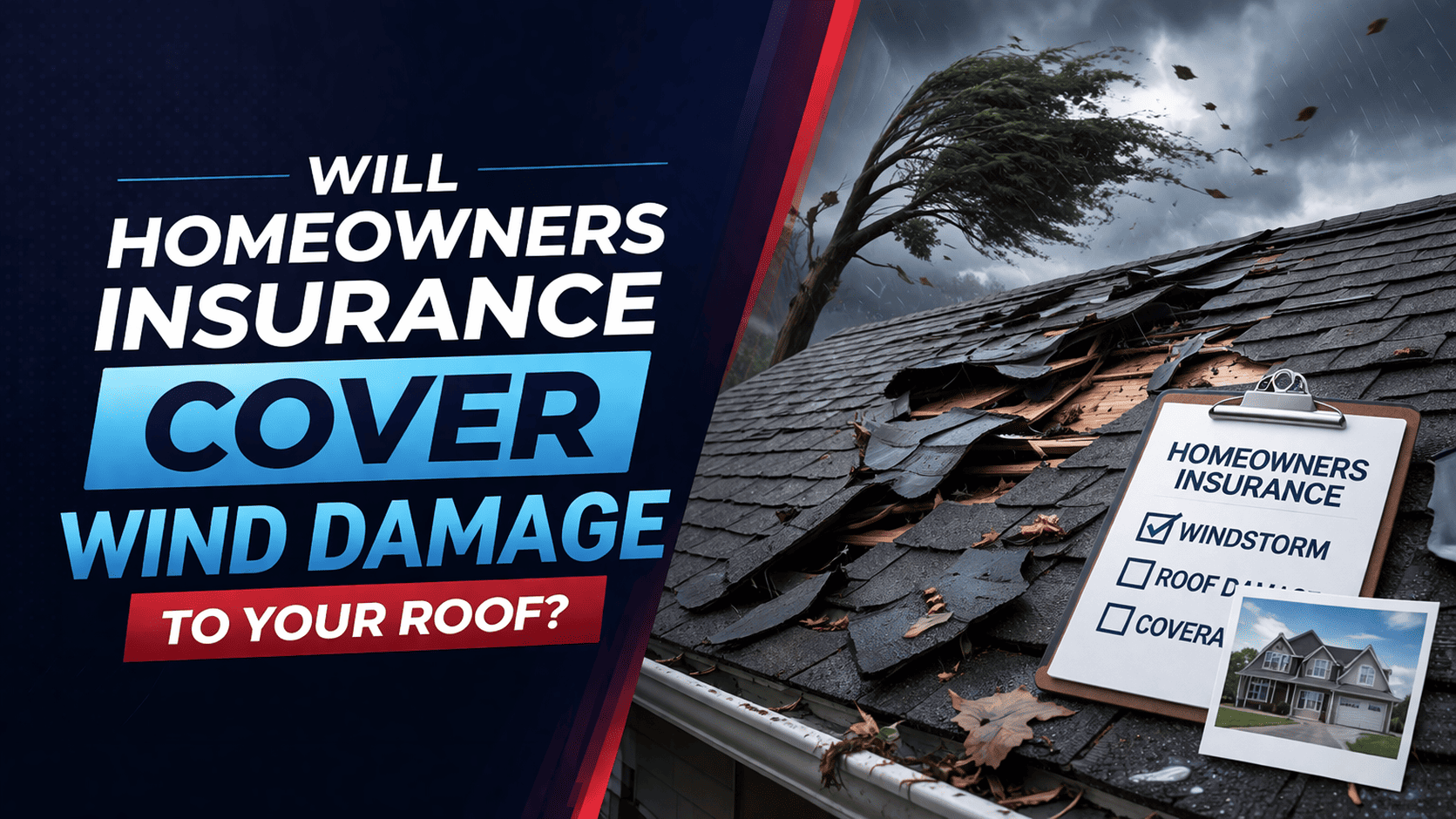
A windstorm just ripped through your neighbourhood. Now the real question: will homeowners insurance cover wind damage to roof repairs or a full roof replacement? Per the Insurance Information Institute, about 1 in 36 insured homes files a property damage claim related to wind or hail each year.
Yes, most homeowners insurance policies treat wind as a covered peril under dwelling coverage. But your claim payout depends on policy provisions, roof age, roofing materials, and how well you document the damage.
Does Insurance Cover Wind Damage to Roof Structures?
Your home insurance policy’s dwelling insurance covers the physical structure, including the roof. Other structures coverage extends to your detached garage, shed, or fence damage. So does insurance cover wind damage to roof components like flashing or roof vents? Here is what qualifies as a covered loss:
- Missing shingles or displaced shingles from high winds or straight-line winds.
- Lifted shingles, curling shingles, or cracked shingles from severe weather.
- Structural damage from fallen trees or falling debris during a thunderstorm.
- Roof leaks and water damage from a wind-driven rain opening.
- Granule loss, broken shingle seal, torn shingles, or exposed underlayment.
- Siding damage, window damage, gutter damage, dented siding from extreme weather.
- Ceiling damage, water stains, or damp rafters from a leaky roof.
Insurers will not pay for normal wear and tear, poor maintenance, aging roof issues, mold and rot, pest infestation, or deterioration. These are coverage exclusions.
How Your Claim Payout Works
Does homeowners insurance cover roof damage from wind in full? That depends on your loss settlement method:
| Valuation Type | What You Receive |
| Replacement Cost Value (RCV) | Full cost to repair or replace with similar materials, minus your deductible. |
| Actual Cash Value (ACV) | Depreciated value based on roof lifespan and condition. Lower settlement amount. |
In hurricane-prone areas or coastal states, expect a separate deductible or percentage-based deductible of 2-5% of your dwelling coverage. That means higher out-of-pocket costs.
Ask about a coverage endorsement, policy rider, extended replacement cost, ordinance or law coverage, or impact-resistant roof endorsement to close any coverage gap.
Signs of Storm Damage and How to File a Claim
Before you file an insurance claim, check your property for:
- Loose shingles, damaged shingles, or shingle flap creases from tornadoes or hurricanes.
- Dents on fascia, soffit, roof vents, flashing, or downspouts.
- Peeling paint, moisture buildup, sagging roof, or structural stress.
- Water leakage or warped areas found during attic inspection.
If you notice any of these signs, schedule a free inspection with DLV Roofing right away. Our team documents every detail for your insurance claim and handles the process from start to finish.
Take photos right away. Keep before photos, weather reports, and contractor estimates together. The insurance claim process has a strict filing deadline, so move fast:
- Report storm damage and start the claims process immediately.
- Schedule a professional inspection with a licensed contractor experienced in insurance claims.
- Make emergency repairs like tarping exposed areas to prevent water infiltration. Save receipts for reimbursement.
- Attend the roof inspection with your roofing contractor when the claims adjuster arrives.
- Compare your repair estimates against the adjuster’s offer to catch a lowball offer.
What Happens if Your Claim Gets Denied?
A claim denial is not the end. If your denied claim letter shows up, request a reinspection or second opinion from a second adjuster. Hire a public adjuster, structural engineer, or independent roofing consultant to strengthen your case. In bad-faith or serious insurance dispute situations, a property damage attorney can fight for your rightful claim settlement.
Common denial reasons include pre-existing damage, improper installation, defective materials, faulty workmanship, cosmetic-only damage, flood damage, earthquake damage, or a missed claim deadline. Neglect, lack of maintenance, and gradual damage also trigger fast denials.
Does Roof Type Affect Your Coverage?
Asphalt shingles and composition shingles are most vulnerable to hail damage and wind. Metal roofs last longer but face cosmetic damage disputes. Tile roofs, slate roofs, wood shingles, and wood shakes each carry different risk profiles and roof repair costs.
Upgrading to impact-resistant shingles can lower your premium and boost your financial protection. Regular roof inspection and routine upkeep keep your roof coverage active and prevent issues that trigger a denied roof insurance claim.
Stop Guessing and Protect Your Home the Right Way
Will homeowners insurance cover wind damage to roof problems at your property? In most standard homeowners policies, yes. But getting the claim settlement you deserve takes fast action, strong documentation, and a licensed roofer who knows the process.
At DLV Roofing, we provide full documentation for insurance claims, emergency storm damage response, and a free roof inspection across NC, SC, TX, TN, and IN. Does homeowners insurance cover roof damage from wind in your area? Call us at (828) 654-0212 or request your free estimate today. We handle the hard part so you can protect your investment with real peace of mind.
Frequently Asked Questions
Does insurance cover wind damage to shingles on older roofs?
An aging roof past its useful life may only get an actual cash value payout with heavy depreciation. Some insurers exclude roofs over 15-20 years. Check coverage limits and policy exclusions with your agent.
What should I do right after wind damages my roof?
Document the damage with photos. Make temporary repairs to stop water leakage. File a claim immediately and schedule a professional inspection with a reputable roofer.
Can a roofing contractor help with my insurance claim?
Yes. A licensed roofer like DLV Roofing can attend the adjuster meeting, spot hidden storm damage, and provide detailed repair estimates that strengthen your case.
Does homeowners insurance cover wind-driven rain leaks?
If wind-driven rain enters through a roof opening from a covered peril, your policy covers the secondary water damage. Rain from gradual damage or lack of maintenance gets denied.
How long do I have to file a wind damage roof claim?
Most insurers set a claim deadline of 1 to 2 years. File promptly. Delays give insurers reason to deny your roof insurance claim entirely.