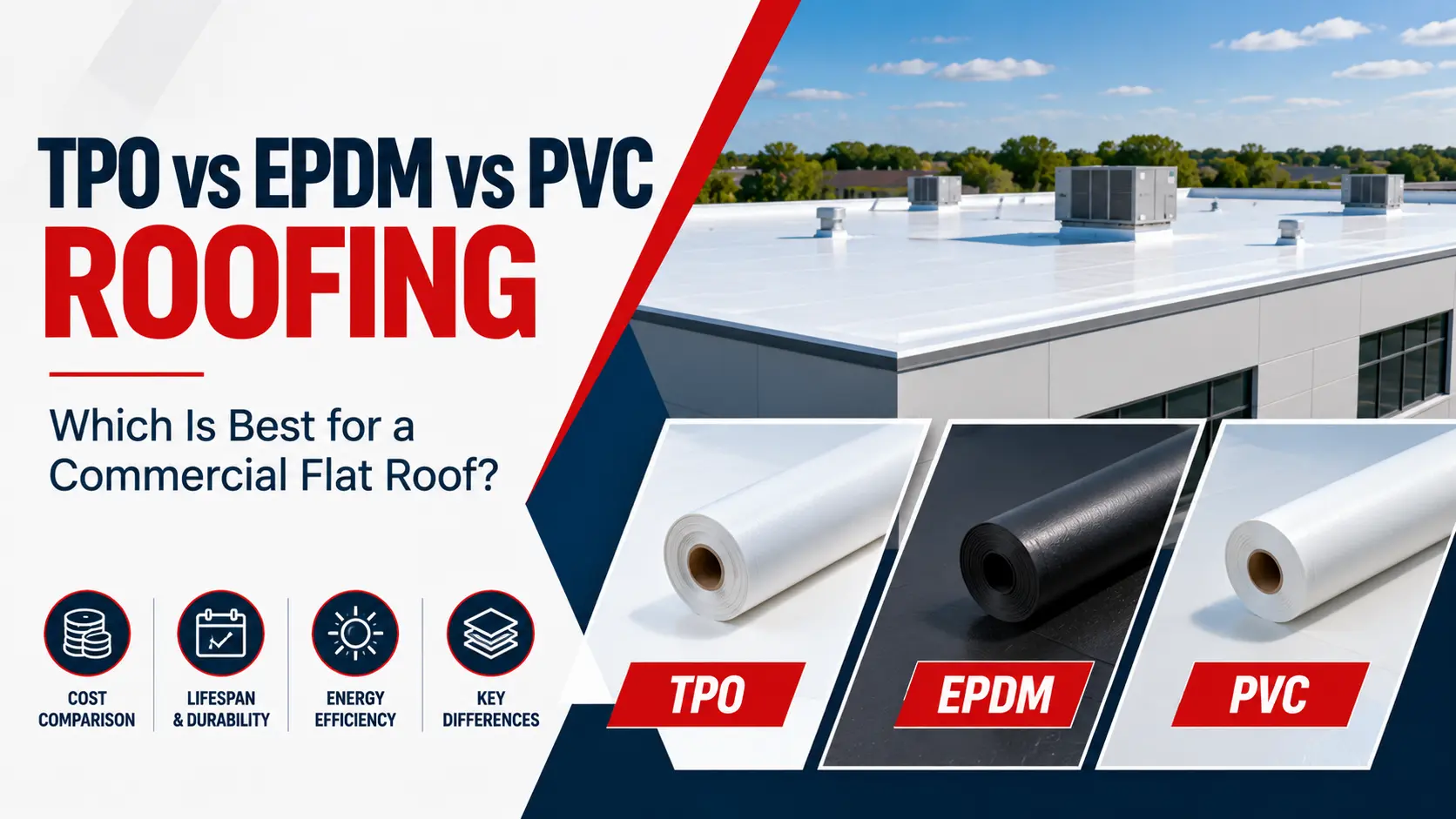
Is your commercial flat roof close to replacement, with every contractor recommending a different membrane for the same building? This is a common problem for building owners, because TPO, EPDM, and PVC roofing look similar on a quote.
For most commercial buildings, TPO roofing gives the best balance of installed cost, seam strength, and energy efficiency. EPDM roofing is a proven choice for cold climates, while PVC roofing suits roofs exposed to grease or chemicals.
Membrane color also affects your energy bills, especially if the building needs air conditioning for most of the year. The Environmental Protection Agency reports cool roofs can reduce peak cooling demand by 11 to 27% in air-conditioned residential buildings. DLV Roofing installs and repairs all three membranes, so this TPO vs EPDM comparison comes from our commercial roofing work.
What TPO, EPDM, and PVC Roofing Membranes Are
All three are single-ply roofing membranes, with one factory-made sheet installed over the insulation to keep water outside your building. The material determines how installers join the seams and how the roof handles heat, cold, and exposure to chemicals.
- TPO (Thermoplastic Polyolefin): TPO is a thermoplastic membrane, usually white, with heat-welded seams that join the sheets into one continuous waterproof surface.
- EPDM (Ethylene Propylene Diene Monomer): EPDM is a synthetic rubber membrane, usually black, with seams that installers join together using seam tape and bonding adhesives.
- PVC (Polyvinyl Chloride): PVC is also a thermoplastic membrane with heat-welded seams, and plasticizers keep the sheet flexible and highly resistant to chemicals.
The Department of Energy lists light-colored single-ply membranes among cool roof products used on low-slope commercial, industrial, and office buildings. These reflective options explain why you see white TPO and PVC membranes on so many commercial and industrial roofs.
TPO vs EPDM vs PVC: Side-by-Side Comparison
The table below compares the three commercial flat roof systems on the points that matter most when planning your replacement. These national installed price ranges come from HomeGuide, while roof size and insulation affect your cost per square foot.
| Factor | TPO | EPDM | PVC |
| Material | Thermoplastic | Synthetic rubber | Thermoplastic |
| Usual Color | White | Black | White |
| Seams | Heat-welded | Taped and glued | Heat-welded |
| Installed Cost per ft² | $4 to $10 | $3.50 to $10 | $5 to $12 |
| Typical Lifespan | 20 to 30 years | 25 to 30 years | 20 to 30 years |
| Best For | Warehouses, retail, offices | Cold climates, tight budgets | Restaurants, chemical exposure |
| Watch For | Quality differs by product | Seams need regular checks | Higher upfront cost |
TPO vs EPDM: Key Differences for Commercial Roofs
Most building owners end up choosing between these two membranes, so the TPO vs EPDM decision deserves a closer look. The four differences below explain why one membrane fits a commercial building better than the other one does.
Seam Strength and Leak Resistance
Seams are the weakest part of any flat roof, because most commercial roof leaks begin where two sheets meet. TPO seams are heat-welded, so the sheets fuse into a joint that is often stronger than the membrane itself.
EPDM seams depend on seam tape and adhesives, which can dry out and loosen as the roof gets older. That does not make EPDM a weak roof, but every inspection should include checking the seams for these changes. During a commercial roof inspection, our DLV Roofing team checks these seams along with the flashings and drains.
Energy Efficiency and Rooftop Heat
White TPO reflects sunlight away from your building, keeping the roof cooler and reducing the load on air conditioning. Black EPDM absorbs more heat, and that extra warmth can help a building in a cold climate during winter.
The EPA also notes a heating penalty for reflective roofs in cold climates, although summer cooling savings typically offset it. If you manage a building up north, our article on white roofs in winter explains this trade-off in more detail.
Cold-Weather Flexibility and Hail
EPDM roofing has a long record in cold weather, because the rubber membrane stays flexible through repeated freeze-thaw cycles. The EPDM Roofing Association notes that EPDM has served the low-slope commercial roofing industry for over 40 years.
TPO also performs well in cold regions when a quality membrane is installed correctly over a cover board. If hail is common in your area, a 60 or 80 mil membrane protects the roof better than thinner sheets.
Installed Cost and Service Life
TPO and EPDM cost about the same to install, so price alone rarely decides between these two membranes. On HomeGuide, EPDM roofing ranges from $3.50 to $10 per square foot installed, while TPO ranges from $4 to $10.
Installation and maintenance affect service life more than the membrane’s label, and both membranes can last for decades. To help you compare beyond TPO vs EPDM, DLV Roofing covers other systems in our best commercial roofing material article.
When PVC Roofing Is Worth the Higher Cost
PVC roofing costs more than TPO or EPDM, with HomeGuide listing it at $5 to $12 per square foot installed. However, PVC resists grease, oils, and many chemicals that slowly break down the other two membranes over time.
That resistance makes PVC the right choice for restaurants, commercial kitchens, food processing plants, and manufacturing facilities with rooftop exhaust. If kitchen exhaust fans release grease onto your roof, TPO or EPDM around those vents can soften and fail early.
Like TPO, PVC has heat-welded seams, so the roof provides strong leak resistance along with good resistance to fire. For a standard warehouse or office with no chemical exposure, the extra cost usually brings less benefit. If grease is already damaging your roof, DLV Roofing can inspect the membrane and confirm whether PVC is needed.
Best Flat Roof Membrane by Climate
Climate changes which membrane makes sense, and our crews see this difference across the three regions where DLV Roofing works.
- Indianapolis, IN: Cold winters, freeze-thaw cycles, and hail make flexible EPDM and thicker TPO membranes the strongest choices for this area. A cover board under the membrane adds hail protection, which our commercial roofers in Indianapolis can price into your estimate.
- Asheville and Western NC: Mountain weather brings snow, ice, and wide temperature changes, so our Asheville roofing contractors focus on seams, drainage, and insulation.
- Charleston and the Lowcountry, SC: Long, hot, humid summers reward a white reflective membrane that lowers cooling costs for most of the year. Since wind uplift is a concern during hurricane season, our roofing company in Charleston checks how every membrane is attached.
Best Membrane by Building Type
How you use the building matters as much as the weather, so consider these common commercial properties when comparing membranes.
- Warehouses and Retail Centers: Large open roofs benefit from TPO, because wide sheets install quickly and the reflective surface lowers cooling costs.
- Restaurants and Food Facilities: PVC is the safer membrane here, since grease from kitchen exhaust damages TPO and EPDM over time.
- Offices, Schools, and Cold-Climate Buildings: EPDM works well where heating costs are higher than cooling costs and the replacement budget is tight.
- Roofs With Heavy Rooftop Equipment: Welded TPO or PVC seams handle foot traffic around HVAC units better, especially when walkway pads are added.
- Roofs With Ponding Water: EPDM tolerates standing water slightly better, but tapered insulation and clear drains remain the real solution for any membrane.
What Matters More Than the Membrane
Many flat roofs fail early because of the system around the membrane, not because of the membrane itself. If you are comparing roofing quotes, check these four points on each one before looking at the price.
- Membrane Thickness: Single-ply membranes come in 45, 60, and 80 mil, and thicker sheets resist punctures, hail, and foot traffic better.
- Attachment Method: Installers can use fully adhered, mechanically attached, or ballasted systems, depending on your roof deck and exposure to wind.
- Insulation and Drainage: A system with polyiso insulation, tapered slopes, and a cover board protects the membrane from ponding water and impact damage.
- Maintenance: Regular inspections of seams, flashings, and drains catch small problems early, which the DLV Roofing roof maintenance program is designed to do.
Even a good membrane needs proper installation to prevent leaks, so your contractor’s experience matters as much as the material. DLV Roofing has served property owners since 1999, and a licensed, fully insured team handles every commercial roofing project.
Choose the Right Commercial Flat Roof Membrane With DLV Roofing
TPO, EPDM, and PVC are all reliable roofing systems when they match the building, the climate, and the budget. TPO fits most commercial roofs, EPDM suits cold climates, and PVC protects roofs exposed to grease and chemicals.
A small seam leak can soak the insulation before you see a ceiling stain, so an early inspection saves money. If you are still comparing TPO vs EPDM, our team can inspect the roof and explain which system fits.
Contact DLV Roofing to schedule a free commercial roof inspection in Indianapolis, Asheville, or Charleston before the next storm season. You can also learn more about our commercial roofing services and request a free, no-obligation estimate for your roof replacement.
Frequently Asked Questions
1. Which Is Better, TPO or EPDM?
Neither membrane is better for every building, because the right choice depends on climate, rooftop equipment, and budget. If your building has high cooling costs, TPO is usually preferred, while EPDM is valued for its cold-weather flexibility.
2. Which Lasts Longer, TPO or EPDM Roofing?
Both membranes can last 20 to 30 years when installers fit the roof correctly and inspections follow a regular schedule. EPDM has the longer track record on commercial roofs, but newer TPO membranes continue to close that gap.
3. Is PVC Better Than TPO for a Flat Roof?
PVC is the better membrane when the roof faces exposure to grease, oils, or chemicals, as restaurant roofs do. If the building has no chemical exposure, TPO usually delivers similar performance at a lower installed cost.
4. Can an EPDM Roof Be Replaced With TPO?
Owners can replace an old EPDM roof with TPO, and many make this change because they want the reflective surface. In most cases, installers remove the old membrane and any wet insulation first, so the new system qualifies for warranty.
5. How Much Does a TPO or EPDM Roof Cost per Square Foot?
According to HomeGuide, TPO roofing costs $4 to $10 per square foot installed, and EPDM roofing costs $3.50 to $10. Your exact price depends on roof size, insulation, tear-off needs, and the membrane thickness you choose for the building.