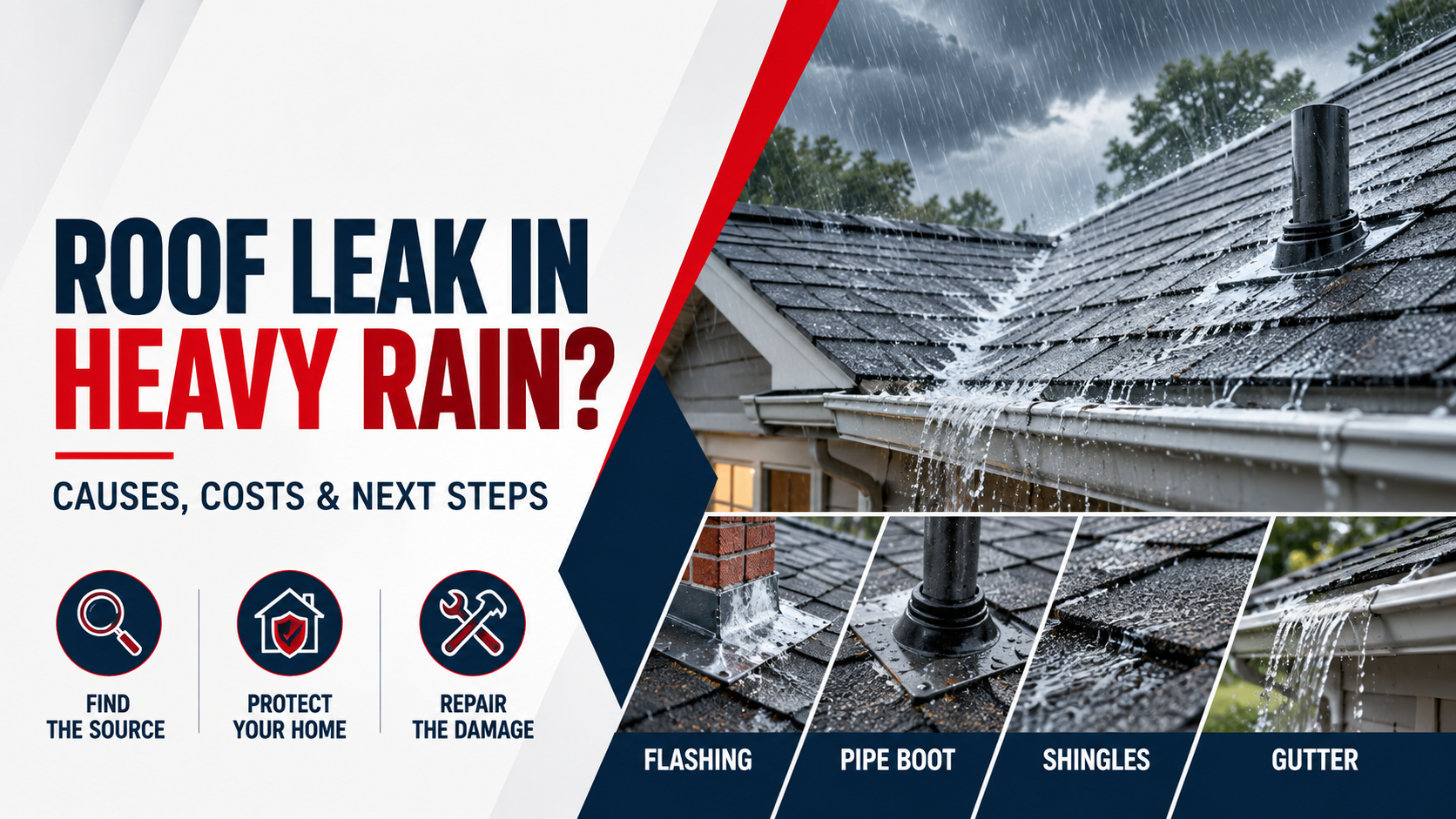
Does your ceiling stay dry during a light shower, then start dripping when the storm gets stronger? A roof leak in heavy rain usually means water is reaching an opening around flashing, a pipe boot, shingles or another part of the roof. The right repair depends on where water enters, which may be far from the stain you can see.
The Insurance Information Institute reports that water damage and freezing claims averaged $15,400 from 2019 to 2023. Wind and hail made up 42.5% of homeowners insurance losses in 2023. These broad figures show why a small leak deserves attention.
Why a Roof Leaks Only in Heavy Rain
Some roofers call this a volume-dependent leak. During heavy rainfall, more water flows over each roof joint than during a light drizzle. If flashing has lifted, that extra flow may reach the opening. Wind-driven rain can also blow beneath shingle edges that ordinary rain misses.
Water may then run along a rafter or across the roof decking. If you see a hallway stain, the opening might sit higher up near a chimney. A roofer needs to follow that path.
Common Causes of a Roof Leak in Heavy Rain
Chimney Flashing, Wall Flashing and Skylights
Flashing directs water away from joints near walls, chimneys and skylights. If it lifts or rusts, rain can reach the roof beneath it. Failed step flashing along a wall or chimney may leave a stain inside that wall.
- Chimney flashing failures: A cracked chimney crown or worn mortar joints can also let water in. A roofer should check both the masonry and flashing.
- Skylight seals: If water marks appear around a skylight frame, the seal or nearby flashing may have failed. The same check matters for skylights and sun tunnels.
Pipe Boots Around Plumbing Vents
A pipe boot seals one of your plumbing vent pipes where it passes through the roof. Sun and weather can crack its rubber collar, sometimes after 10 to 15 years, depending on exposure. Rain may then travel down the pipe and show up near a bathroom or kitchen.
Roof Valleys and Gutters
A roof valley collects water from 2 slopes. During a downpour, trapped leaves or worn valley lining may let water in. Clogged gutters and downspouts can also spill water near the roof edge, wetting the fascia and soffits. An eave leak calls for a check of both drainage and roofing.
Shingles, Nails and Underlayment
- Damaged or missing shingles: Wind can loosen a shingle’s seal strip before the shingle blows away. That opening gives wind-driven rain a route beneath the shingle.
- Nail pops and granule loss: A raised nail may lift the shingle around it. Granule loss shows that a shingle is wearing down, but it does not prove the roof decking is exposed. A roofer should check the shingle and the underlayment beneath it.
Metal and Flat Roof Details
On a metal roof, loose or damaged fasteners and failed seam sealant can create small entry points. Low-slope roofs need clear drains because ponding water can sit against weak seams. These details matter on many commercial roofing systems as well as some homes.
DLV Roofing can trace the leak and repair failed pipe boots, flashing, vents or ridge caps. If access and parts allow, our crew may complete a targeted repair in one visit.
Where Ceiling Stains Appear and What to Check
Ceiling stains offer clues, but an inspection must confirm the source.
| What you notice inside | What a roofer may check |
| Stain near a bathroom or kitchen | Pipe boot around a plumbing vent |
| Stain at the top of an exterior wall | Gutter overflow, wall flashing or siding and windows |
| Damp patches in cold weather without a storm | Condensation and attic ventilation |
If a patch appears without rain, an attic check can help distinguish condensation from a roof leak.
What to Do While the Roof Is Leaking
Stay off the roof during a storm because wet shingles, wind and lightning make access dangerous. Focus on safety indoors.
- Catch the drip: Place a bucket below it and put towels around the bucket to protect the floor.
- Move belongings: Shift furniture, rugs and electronics away from the water. Use plastic sheeting over heavy items you cannot move safely.
- Watch electrical areas: If water reaches a light fixture or outlet, keep clear. Switch off the affected circuit at the breaker only if the panel and your path to it are dry. Otherwise, call an electrician or emergency service.
- Record what you see: Take photos of the drip and ceiling stains when it is safe. Keep people away from a bulging ceiling because wet drywall can fall.
Once everyone is safe, arrange an assessment. DLV Roofing offers 24-hour emergency services to protect urgent roof damage before permanent work begins.
Roofing When It Rains: Temporary and Permanent Repairs
Roofing when it rains usually means controlling water until a full repair is safe. A crew may use a roof tarp. The permanent repair follows when the roof can be inspected and materials installed correctly.
| Temporary protection | Permanent repair |
| Secure a roof tarp over the damaged area | Replace damaged shingles, underlayment or roof decking |
| Use roofing cement where the product and conditions allow | Repair the flashing around a chimney, wall or skylight |
| Clear a safe, reachable drainage blockage | Fix gutter pitch or downspout problems if needed |
Temporary patching limits water entry but does not identify its cause. Avoid spray foam or caulk in the attic; it may hide the water’s path and trap moisture.
How Much Does Roof Leak Repair Cost?
Cost depends on the source and the extent of damage. Replacing 1 pipe boot costs less than opening a roof valley and replacing wet wood. These ranges are general estimates, not a quote.
| Repair | Planning range |
| Pipe boot or a few shingles | $250 to $600 |
| Chimney or wall flashing | $500 to $1,500 |
| Roof valley repair | $800 to $2,500 |
| Rotted decking section | $500 to $2,000 or more |
Roof access and materials affect price. Drywall and insulation work cost extra. DLV Roofing offers free estimates after an inspection.
Why a Leaking Roof Needs Prompt Attention
The drip may stop, but insulation and framing can hold hidden water damage. The U.S. Environmental Protection Agency advises drying wet areas within 24 to 48 hours to help prevent mold growth. Fix the roof opening and dry the space below it.
Get help quickly if water streams in or reaches several rooms. A sagging ceiling also needs urgent attention. If a musty smell lingers, damp material may remain above you.
Will Homeowners Insurance Cover a Roof Leak?
Coverage depends on the cause and your policy. A sudden and accidental event, such as wind tearing off shingles, may qualify; wear and tear may not. Your insurer decides the insurance claim, so a storm date alone cannot promise payment.
- Document the damage: Take photos, note when the leak began and keep receipts for emergency protection. Save damaged materials if your insurer asks you to.
- Get an inspection report: Ask the roofer to describe the likely entry point and any signs of storm damage or age. This gives the adjuster useful details to review.
- Check your deductible: Wind or hurricane claims may have a separate deductible, especially in coastal areas. Also check whether your roof has replacement cost or actual cash value coverage.
DLV Roofing can help document roof damage, assist with claim forms and meet the adjuster on site. Your insurer still decides coverage and payment, so review the policy before approving work based on an expected payout.
When Roof Repair May Become Roof Replacement
One leak rarely means you need a new roof. If most shingles remain sound, a focused repair may work. Repeated leaks, however, may point to wider wear.
- If your roof is over 20 years old and shows widespread granule loss or curling shingles, ask a roofer to assess its remaining life.
- If leaks return after sound repairs, or soft decking extends across large sections, compare the cost and value of further repairs with replacement.
If roof replacement is the better fit, DLV Roofing provides a 5-year workmanship warranty on full roof replacements. Manufacturer coverage depends on the roofing materials you choose.
Heavy Rain Risks in Asheville, Charleston and Indianapolis
Local weather offers clues, but each roof still needs its own inspection.
- Asheville and Western NC: Heavy mountain rain and nearby trees can leave debris in valleys. If a storm has lifted flashing, roofing contractors in Asheville can check it before more rain reaches the opening.
- Charleston and the Lowcountry: The National Weather Service lists Atlantic hurricane season as June 1 to November 30. Coastal exposure can also affect metal parts, so timely roof repair in Charleston matters when fasteners or flashing show damage.
- Indianapolis: Winter ice dams can push water beneath shingles. If a stain returns during spring rain, Indianapolis roofing contractors can check the roof edge, underlayment and other possible entry points.
DLV Roofing serves all 3 areas and states that it is licensed and insured in NC, SC and the Indianapolis area.
How to Help Prevent the Next Roof Leak
Schedule a roof inspection yearly and after major storms. Also clear gutters each spring and fall so water can drain away from the roof edge.
If you prefer a maintenance schedule, DLV Roofing’s roof maintenance plans include 1 to 4 visits a year. The program checks flashing, pipe penetrations, gutters and debris, which helps catch small problems before the next heavy storm tests them.
Get the Leak Checked Before the Next Storm
A roof leak in heavy rain means water has found a way in, even if the ceiling later dries. Find the opening, repair it and dry wet materials inside.
Are you searching for roof leak repair near me after a storm? DLV Roofing has provided residential and commercial roofing since 1999. Its team can inspect the leak and explain whether a repair or a full replacement fits the roof’s condition.
Book roof leak repair with DLV Roofing before another downpour reaches the same spot.
FAQs
1. Why does my roof leak only when it rains hard?
Heavy rain sends more water over weak roof details than light rain does. If flashing has lifted or a pipe boot has cracked, that water may reach the opening. Wind can also push rain beneath shingles, so a roof leak in heavy rain may appear only during certain storms.
2. Can a roofer fix a leak while it is raining?
A roofer may protect the area with a tarp or another temporary measure if conditions are safe. The permanent repair usually follows when the crew can inspect the roof and install materials as their instructions require.
3. Why does my roof keep dripping after the rain stops?
Water can sit in insulation, run along framing or collect above drywall before it reaches the room. So, the drip may continue after the sky clears. The roof still needs an inspection to find where the water entered.
4. How long can a roof leak before damage starts?
Drywall and insulation can become wet during the first storm. Mold risk rises if those materials stay damp, which is why the EPA recommends drying them within 24 to 48 hours. A roof leaking in heavy rain also needs repair before another storm adds more water.
5. Is a roof leak in heavy rain an emergency?
Yes, if water flows into a room, a ceiling bulges or moisture reaches electrical fixtures. Keep people clear and seek urgent help. Even a slower drip needs prompt attention because water can remain above the ceiling after the visible leak stops.