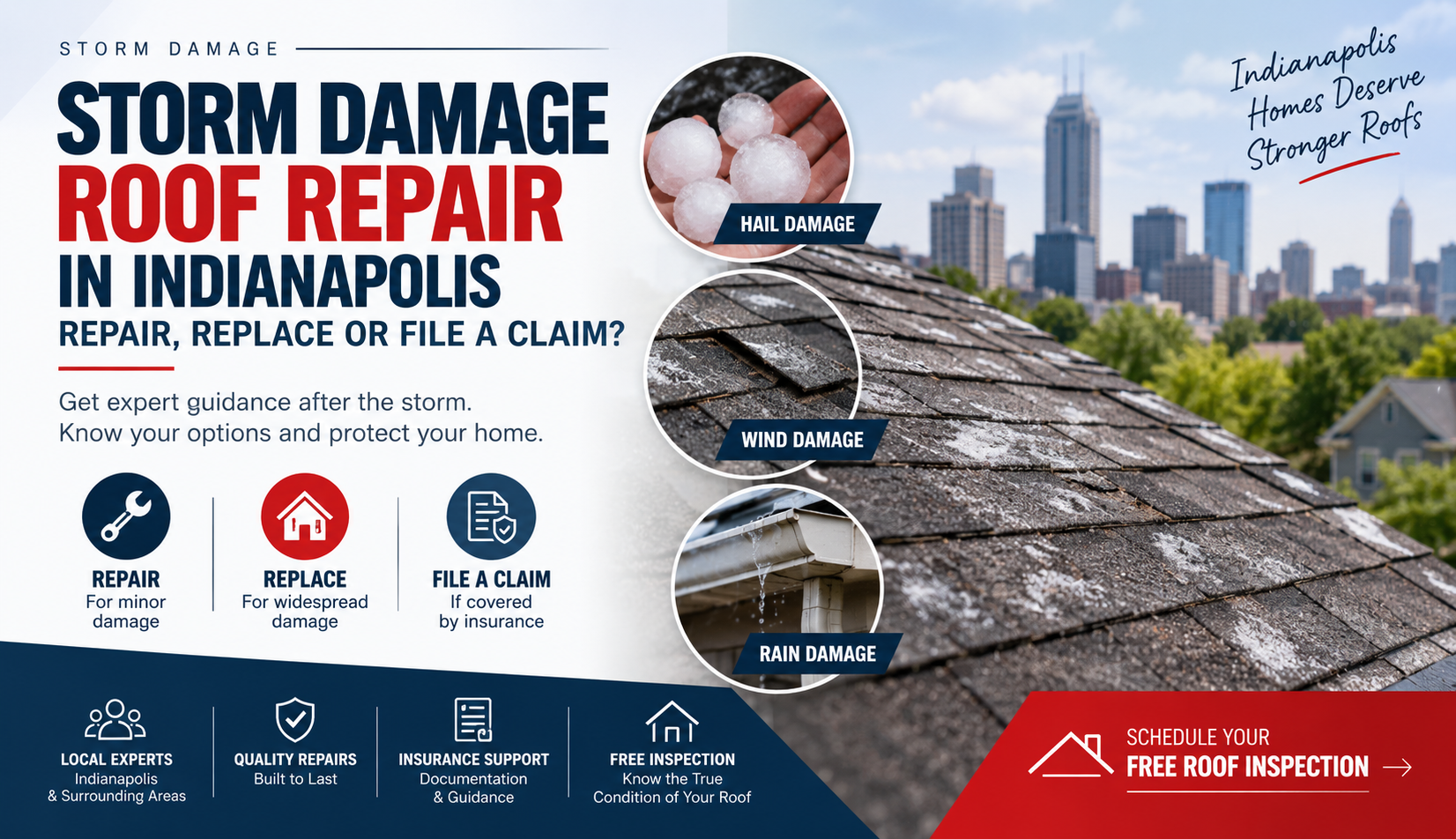
A hailstorm crosses Marion County, and while your neighbor plans a new roof, you stare at a fresh ceiling stain. If damage affects a small area, repair may work; widespread damage may need replacement. A claim depends on your coverage. Before you commit, compare the roof’s condition, repair cost and deductible. Your neighbor’s roof may need different work from yours.
Wind and hail accounted for 40.7% of homeowners insurance losses in 2022 in the Insurance Information Institute table. That exceeded water damage and freezing, as well as fire and lightning.
What Storm Damage Roof Repair in Indianapolis Covers
Storm damage roof repair in Indianapolis starts with finding what the storm damaged and where water can enter. A loose shingle may catch your eye, but the repair scope should cover every affected roof part.
That includes flashing, ridge caps, pipe boots, roof air vents, gutters and downspouts, plus the soffit and fascia. If wind exposes the underlayment or roof decking, water intrusion can spread into your ceilings and walls.
At DLV Roofing, we assess the roof as a whole before we plan roof repairs. This helps you see what the job involves. If we find hidden damage once work starts, the scope may change.
Hail, Wind and Rain Damage: What to Look For
Hail Damage to Asphalt Shingles
Hail can harm the granule layer that shields asphalt shingles from sunlight. If an impact knocks granules loose, it may expose black asphalt or damage the shingle beneath it. However, hail size alone does not decide the damage. Roof age, hail hardness and wind also matter.
When checking hail damage on a roof, a roofer compares marks across the roof. A hail impact pattern on soft metal vents can help show where hail struck. Dents alone cannot prove the hail’s exact size or the need for replacement.
Wind Damage and Broken Shingle Seals
Wind creates uplift near roof edges and along the ridge. As a result, lifted shingles need attention even if you see no missing shingles. A damaged seal strip can let wind-driven rain beneath a shingle that still looks flat.
Straight-line wind events, including derechos, can also cause ridge cap displacement and flashing damage. However, broken seals do not always mean storm damage or a new roof. If shingles remain sound, a roofer may reseal them using the manufacturer’s repair guidance.
Heavy Rain, Ice Dams and Falling Limbs
Heavy rain can expose leaks around older flashing, clogged valleys, cracked shingles or worn pipe boots. In winter, ice dams can force water beneath shingles near the eaves. A falling tree limb may also break through the roof decking.
DLV Roofing helps homeowners across Indianapolis, Carmel, Fishers and Noblesville find the cause and plan the work.
Signs That Call for a Professional Roof Inspection
You may notice a leak before you see roof damage. Once the weather clears, look from the ground and inside your home for these signs:
- Dark bruises on shingles or fresh granule buildup near your downspouts may need a closer look.
- Lifted or creased shingles can point to wind damage, even when the roof has no bare spots.
- Dents on damaged gutters, vents and other soft metals can help document the storm’s effects.
- Water stains near a chimney or across a ceiling may appear right away or after later rain.
- Exposed nail heads, bent drip edge or gutters pulling from the fascia also need attention.
Since age can also cause granule loss, book a professional roof inspection to find the cause. Avoid climbing onto the roof or lifting shingles yourself.
For a free roof inspection in Indianapolis, contact DLV Roofing. Our roof inspection in Indianapolis helps you learn what needs work and why. Request a report with photos to share as proof with your insurer.
Roof Repair or Replacement After a Storm
If the roof still has useful life, a sound repair may keep your home dry for years. But if damage spreads widely, patching may leave problems elsewhere.
Use these factors together, since each roof differs:
| Factor | When repair may fit | When replacement may fit |
| Roof age | Shingles remain sound and flexible | Age and damage make repairs unreliable |
| Damage spread | A small section needs work | Several slopes have extensive damage |
| Shingle condition | A roofer can repair or reseal shingles | Widespread fractures or deterioration prevent sound repairs |
| Matching shingles | Suitable shingles remain available | Available products cannot make a proper repair |
| Overall cost | Repair offers useful life for the cost | Repeated repairs offer poor value |
An 8-year-old roof can need replacement, while an 18-year-old roof may still allow repair. If new shingles differ in color, that alone does not mean your insurer must fund a new roof.
If you need roof replacement, DLV Roofing offers a 5-year workmanship warranty on full replacements. For a full tear-off, include the decking checked board by board in the written scope. That way, you know how we will address damaged wood before new roofing goes on.
When a Roof Insurance Claim Makes Sense
Start with your deductible, which is your share of a covered loss. If the covered repair cost falls below it, your insurer will usually pay nothing. If the cost exceeds it, check how much you would get. Then decide if an insurance claim makes sense.
Replacement Cost, Depreciation and Deductibles
Your declarations page and roof endorsements help explain the coverage. These terms matter when you work out your budget:
- Replacement Cost Value: This covers repair or replacement costs with like materials, within the terms of your policy. Your insurer may hold back recoverable depreciation at first. You then send proof of the work to claim that amount.
- Actual Cash Value: The insurer takes off depreciation, including age-based depreciation. If your roof is older, you may pay more of the bill.
- Wind and hail deductibles: These may use a set sum or a share of the amount that covers your home. For example, 1% or 2% of $300,000 means $3,000 or $6,000.
- Covered cause: Policies commonly cover sudden storm-related roof damage but exclude wear and tear. The storm date helps support what caused the loss.
The NAIC’s post-disaster claims guide explains these coverage differences. Check roof-specific limits even if the rest of your home has replacement cost coverage.
Not sure whether insurance covers wind damage? It often does, but the insurer must review the cause and policy. For wind damage roof replacement in Indianapolis, we can share proof of damage. Your insurer still decides what it will pay.
Documenting the Claim and Repair Scope
If you decide to file a roof insurance claim, keep the records together:
- Take photos from a safe spot before cleanup or temporary work begins.
- Record the storm date and when you first noticed the leak or other damage.
- Call your insurer soon after the storm. Save your claim number and insurance adjuster contact details.
- Get a written damage assessment from your roofer. Compare it with the adjuster scope to see which work the insurer includes.
- Keep receipts for temporary repairs and confirm which costs your policy covers.
The Indiana Department of Insurance says to prevent further damage and keep receipts. It also warns against permanent repairs before the insurer’s inspection. Doing so may put your claim at risk. If urgent work cannot wait, call your insurer and keep a record of its advice.
Missing Items and Cosmetic Exclusions
If your estimate seems low, compare the work line by line. Check ridge cap, drip edge, ice and water shield, and pipe boot replacements where the repair requires them. A supplement seeks payment for added or missed covered work. Photos and cost details help show why you need it.
At DLV Roofing, we can explain our repair scope and document work for the adjuster’s review. If you want us to meet the adjuster on site, discuss a time with our team. Your insurer decides what the policy covers. A roofing contractor does not act as your public adjuster.
Also, cosmetic exclusion endorsements may limit coverage for marks that only affect appearance. Functional damage harms how the roof works or how long it lasts. Photos help document it, but granule loss alone does not settle that question. The goal is to restore the roof to its pre-loss condition. Your policy sets the terms for covered work.
Emergency Roof Protection in the First 48 Hours
If water enters your home, act promptly because it can spread into insulation, drywall and framing. However, stay clear of sagging ceilings, wet wiring and damaged light fixtures.
- Arrange a secured tarp over roof openings when a trained crew can work safely. Proper fastening helps it resist wind uplift.
- Take photos before the crew covers the damage, if conditions allow.
- Use interior protection to keep your things dry. Stay out of rooms that may be unsafe.
- Request a broader check for roof storm damage in Indianapolis so the crew finds the source of your leak.
DLV Roofing offers 24-hour emergency service. Call to check when a crew can safely reach you in Zionsville, Westfield, Plainfield, Avon and Speedway. We also provide storm damage roof repair in Brownsburg.
Commercial Storm Damage Repair in Indianapolis
For property managers, a roof leak can affect tenants, stock and day-to-day work at once. TPO, PVC and EPDM low-slope systems need checks for membrane punctures, seam separation and loose flashing after storms.
Ponding means water remains on the roof; it may point to drainage problems rather than hail damage. If several apartment units have leaks, document each location and check which building policy covers the loss.
Our commercial roofing team can check the damage and plan work around the people in the building. If the work needs tear-off, include debris removal in the scope. Discuss storm damage cleanup services in Indianapolis with us so you know who will clear each area.
After repairs, scheduled roof maintenance helps catch small faults before they spread.
Storm Chasers and Indiana Deductible Rules
After severe weather, storm chasers and out-of-state crews may push you to sign quickly. Take time to check their address, insurance, references and written terms. If someone offers to absorb your deductible, stop before signing.
Indiana Code 24-5-11-10.5 bans offers to pay or rebate a deductible to win the work. The law uses “real property improvement supplier,” which includes a home improvement supplier doing covered work. The Consumer Protection Division handles complaints about unfair business practices.
Choose a licensed and insured local contractor, who meets local rules for the work. DLV Roofing has served property owners since 1999, including homeowners and businesses across central Indiana.
Impact-Resistant Shingles for Future Storms
If you replace the roof, compare impact-resistant shingles before choosing a product. The Insurance Institute for Business and Home Safety tests shingles with 1.5-inch and 2-inch laboratory hailstones. The results help you choose, though no shingle prevents all hail damage.
Some insurers offer discounts for these shingles. Check which products qualify before you buy. DLV Roofing can help you compare options for your roof. The National Weather Service storm records show why hail season and severe weather deserve attention here.
Schedule a Free Storm Damage Roof Inspection
If you’re unsure what the storm left behind, start with a free inspection. We can explain whether repair or replacement makes sense and provide an estimate for the work.
For storm damage roof repair in Indianapolis, call DLV Roofing Indianapolis at (317) 550-0666 or request your free quote. One of our Indianapolis roofing contractors can inspect the roof and discuss the next step with you.
Frequently Asked Questions
1. How Soon Should a Roof Be Inspected After a Storm?
Book an inspection as soon as it is safe, especially if you see a leak. Call your insurer promptly and check your policy deadlines. No single 2-week rule applies to every claim.
2. Will Insurance Cover a Full Roof Replacement in Indiana?
It may if covered damage requires replacement and your policy allows it. The insurer checks the damage and repair options. Your policy terms and deductible also affect what it pays.
3. Can Wind Damage a Roof With No Shingles Missing?
Yes. Wind can crease shingles or break seals while leaving them in place. If you suspect storm damage in Indianapolis, Indiana, an inspection can help show the cause and what needs work.
4. What Happens if a Roof Insurance Claim Gets Denied?
If you hear “claim denied,” request the reason and policy wording in writing. Then compare them with your inspection findings. You can send new proof or seek help from Indiana’s insurance department. However, better photos cannot change what your policy excludes.
5. Does Storm Damage Roof Repair in Indianapolis Include Gutters and Siding?
It can if the storm damaged those areas and the scope includes them. DLV Roofing also handles siding, windows and doors, so discuss all affected areas during the inspection.