Are you trying to budget for a new commercial roof, but every quote uses a different price per square foot? Building owners often face this problem, because two roofs of the same size can need very different amounts of work.
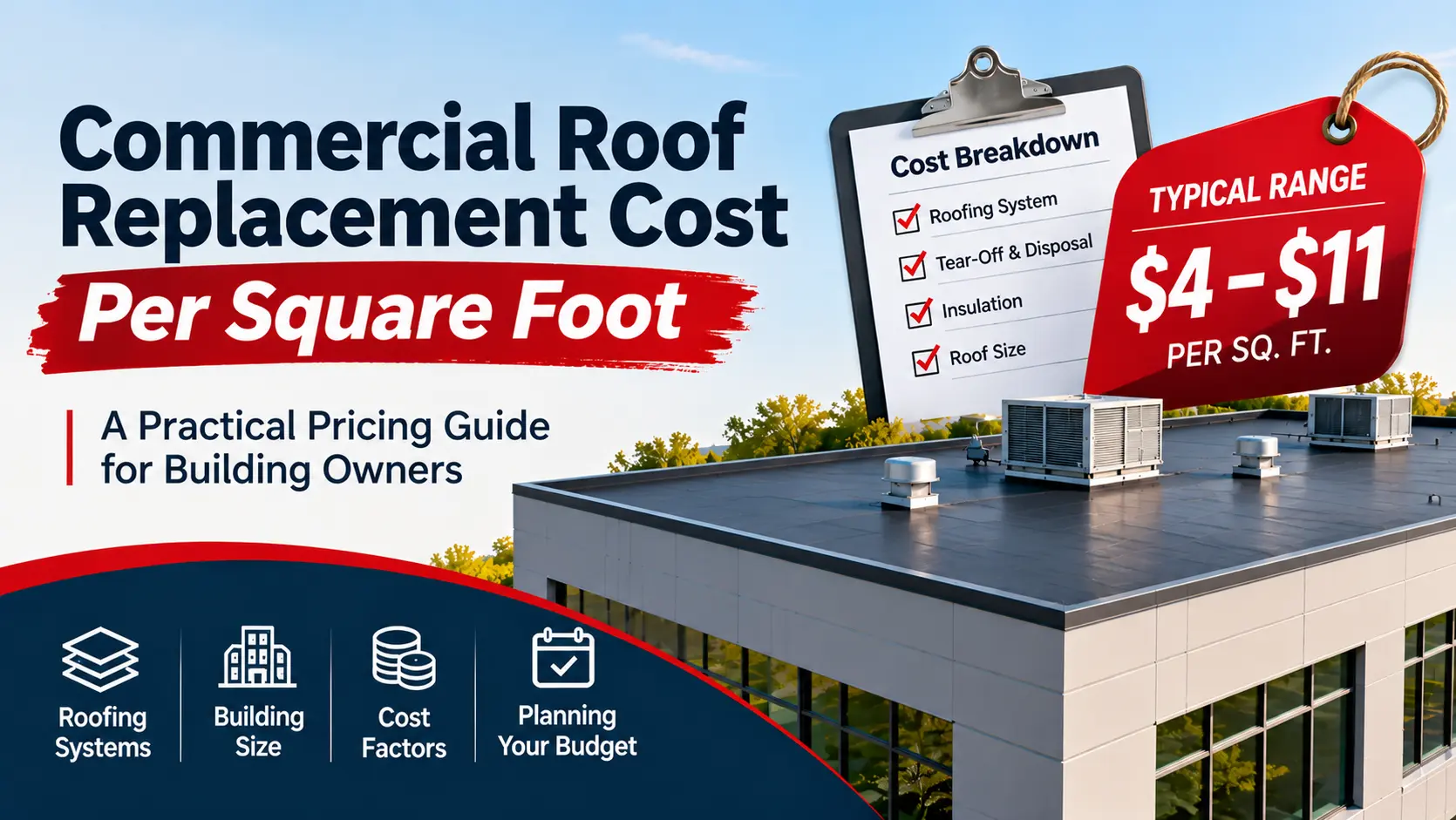
For a flat roof, the commercial roof replacement cost per square foot usually runs $4 to $11, according to HomeGuide. Your own number depends on the roofing system, the tear-off, the insulation, and the condition of the roof deck.
A roof replacement is one of the largest projects a commercial building will need, so a clear budget matters early. DLV Roofing prepares free commercial roofing estimates, and this guide explains what shapes the price before you request an estimate.
Average Commercial Roof Replacement Cost per Square Foot
The average commercial roof replacement cost per square foot depends first on whether the roof is flat or sloped. HomeGuide lists a commercial flat roof at $4 to $11 per square foot installed, including both labor and materials.
Roofing contractors often price by the roofing square instead, and one square covers 100 square feet of roof area. If a quote shows $700 per square, that price equals $7 per square foot for the same scope of work.
A full tear-off with new insulation and a system warranty usually falls in the upper half of that national range. Sloped commercial roofs with standing seam metal cost more per square foot, but a metal roof also lasts much longer.
Commercial Roof Replacement Cost by Roofing System
The roofing system directly affects your price, because each material needs different labor, accessories, and methods of installation. For comparison, this table shows national installed price ranges from HomeGuide for the most common commercial roofing systems today.
| Roofing System | Installed Cost per ft² | Best For |
| EPDM rubber membrane | $3.50 to $10 | Large, simple flat roofs |
| TPO membrane | $4 to $10 | Most low-slope commercial buildings |
| PVC membrane | $5 to $12 | Restaurants and chemical exposure |
| Modified bitumen | $4 to $7.50 | Smaller roofs with foot traffic |
| Built-up roofing (BUR) | $3.50 to $7.50 | Flat roofs needing layered protection |
| Metal roofing | $5 to $16 | Sloped roofs and long-term ownership |
The cheapest system is not always the lowest cost, since a longer service life spreads the price over more years. If you are still comparing membranes, our article on the best commercial roofing material explains where each roofing system fits.
Commercial Roof Replacement Cost by Building Size
Roof size has the biggest effect on the total project cost, although larger roofs usually cost less per square foot. The estimates below apply the national range of $4 to $11 per square foot to common commercial building sizes.
| Roof Size | Estimated Replacement Cost | Common Building |
| 5,000 ft² | $20,000 to $55,000 | Small office or retail store |
| 10,000 ft² | $40,000 to $110,000 | Restaurant or medical office |
| 20,000 ft² | $80,000 to $220,000 | Retail strip or light industrial |
| 50,000 ft² | $200,000 to $550,000 | Warehouse or distribution center |
These figures are planning ranges only, so please do not read them as DLV Roofing prices for your building. A roof inspection is the only way to turn a rough range into a number you can budget around.
Factors That Affect Commercial Roof Replacement Cost
Two buildings with the same square footage can receive very different quotes, and these factors explain most of that gap.
Tear-Off and Disposal
Removing the existing roof adds labor, dumpsters, and disposal fees before the crew can install any new roofing material. HomeGuide puts a flat roof tear-off at $1 to $2 per square foot, and wet insulation makes the removal slower.
Insulation and Energy Code Requirements
Insulation is often the second-largest material cost on a commercial flat roof, right after the roofing membrane itself. Current energy codes can require a higher R-value than the old roof had, which means installing thicker polyiso insulation.
Tapered insulation costs more as well, but it moves ponding water toward the drains and protects the new membrane. That extra slope is often cheaper than repairing leaks caused by standing water a few years later.
Roof Deck Condition
Nobody can see the full roof deck until the old roofing comes off, so deck repairs are a common surprise. If water has damaged the steel, wood, or concrete deck, those sections need repair before the crew installs new roofing.
Ask for a deck repair unit price in your estimate, so any extra work is priced before the project starts.
Roof Access, Height, and Rooftop Equipment
- Building Height: Taller buildings need cranes or hoists to lift roofing materials, so equipment adds to the project’s labor costs.
- Rooftop Equipment: Every HVAC unit, vent, skylight, and drain needs custom flashing, which takes more time than open roof area.
- Occupied Buildings: If your business stays open during the work, the crew may need phased schedules and protected entrances for customers.
- Roof Complexity: Parapet walls, multiple roof levels, and tight corners increase the detail work compared with one large open rectangle.
Warranty, Permits, and Local Labor
A system warranty covering both labor and materials costs more than a material-only warranty, but it protects a larger investment. DLV Roofing provides workmanship and extended manufacturer warranties, and our team explains each option before you sign.
Permit fees and local labor rates also change by region, so some difference in pricing between cities is normal. Quotes from our roofing contractors in Indianapolis can differ from estimates by our Asheville roofers or Charleston roofing company.
Repair, Recover, or Replace: Which Option Fits the Budget
A full replacement is not always the right first step, so an honest roof inspection should compare all three options.
- Repair: Commercial roof repair makes sense when leaks affect only a few seams or flashings and the insulation is dry.
- Recover: A recover installs a new membrane over the existing roof, saving tear-off costs when that roof is dry and sound.
- Replace: Replacement is the better investment when insulation is wet, leaks keep returning, or the roof has reached its service life.
If you are unsure, these signs your commercial roof needs repair or replacement can help you decide. DLV Roofing also offers a free commercial roof inspection, where we examine the roof and plan the work together.
What a Commercial Roofing Estimate Should Include
A low price per square foot can hide missing work, so compare what each estimate includes before comparing the totals.
- Scope of Removal: The estimate should state whether the contractor will tear off or recover the roof, including the number of layers removed.
- Insulation Details: Look for the insulation type, thickness, and R-value, along with any tapered insulation planned for better drainage.
- Membrane and Attachment: The roofing system, membrane thickness, and attachment method should all be written clearly, never left as a general description.
- Flashing and Edge Metal: Your estimate should list new flashings, edge metal, and drains, because these protect areas where most commercial roof leaks begin.
- Warranty Terms: Both the workmanship warranty and the manufacturer warranty should list their length and exactly what they cover.
If a quote leaves out several of these items, the final bill will likely be higher than the quote. Our DLV Roofing estimates include a detailed plan of action, so you know what the price covers before work begins.
How to Reduce Commercial Roofing Costs
- Plan Before the Roof Fails: Emergency replacements cost more, because wet insulation, interior water damage, and rushed schedules all add to the bill.
- Maintain the Existing Roof: Regular inspections extend roof life, and the DLV Roofing roof maintenance program offers one to four visits a year.
- Ask About the Section 179 Deduction: IRS Publication 946 lists roofs among the improvements to nonresidential real property that can qualify for this deduction. The maximum deduction is $2,560,000 for tax years beginning in 2026, so ask your tax advisor how the rule applies.
- Check Your Insurance After Storms: If hail or wind damaged the roof, a covered roof insurance claim may pay for part of the replacement.
- Choose the Right System: Paying slightly more for a thicker membrane or better insulation often lowers repair and energy costs for many years.
Get an Accurate Commercial Roof Replacement Cost From DLV Roofing
Commercial roof replacement cost per square foot is a starting point, because tear-off, insulation, and the deck decide the total. An itemized estimate shows exactly where the money goes, and it helps you compare roofing contractors fairly.
If a failing roof keeps leaking, more insulation gets wet over time, and the replacement becomes more expensive. DLV Roofing has served property owners since 1999, and our licensed, insured team manages each project from inspection to completion.
Contact DLV Roofing today for a free, no-obligation estimate on your commercial roofing project in Indianapolis, Asheville, or Charleston.
Frequently Asked Questions
1. How Much Does It Cost to Replace a 10,000 Square Foot Commercial Roof?
At the HomeGuide range of $4 to $11 per square foot, a 10,000 ft² flat roof costs $40,000 to $110,000. Your total depends on the roofing system, tear-off, insulation, and how much rooftop equipment needs new flashing.
2. What Is the Cheapest Commercial Roofing System?
EPDM and built-up roofing start lowest among common systems, at about $3.50 per square foot installed in HomeGuide data. However, the lowest upfront price is not always the best value if that system needs repairs sooner.
3. How Long Does a Commercial Roof Replacement Take?
Small commercial roofs can take a few days, while large or complex buildings can take several weeks to complete. Weather, tear-off, deck repairs, and working around an open business all affect the schedule for your project.
4. Does Insurance Cover Commercial Roof Replacement?
Insurance may cover a replacement when damage comes from a covered event, such as hail, wind, or a fallen tree. Normal aging and deferred maintenance are usually excluded, so check your policy and document the damage early.
5. Is It Cheaper to Recover or Replace a Commercial Flat Roof?
A recover usually costs less than a replacement, because it avoids most of the tear-off and disposal work. If the insulation is wet or the roof already has two layers, a full replacement is typically required instead.