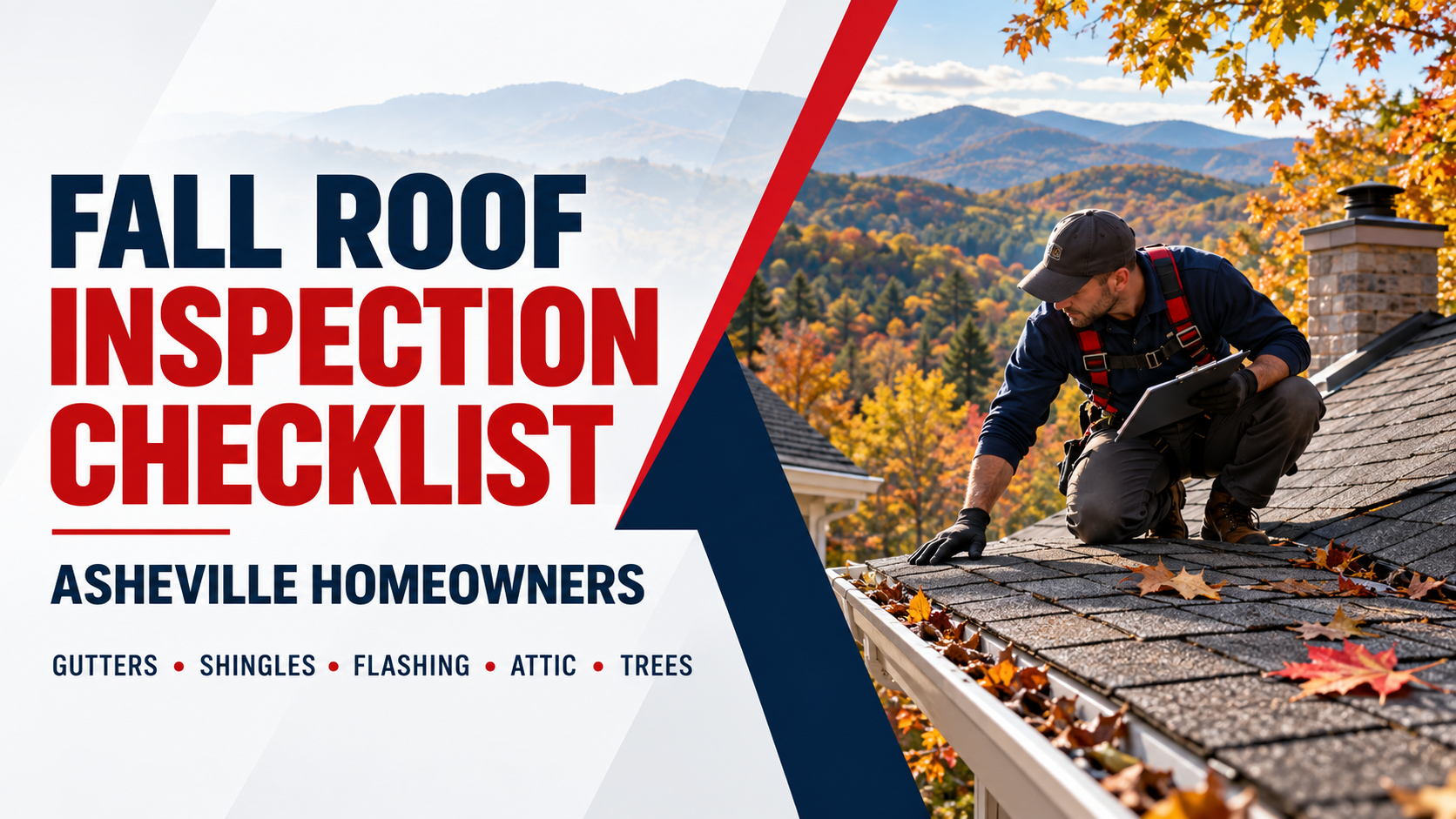
When did anyone last look at your roof properly? A fall roof inspection checklist covers gutters, shingles, flashing, attic moisture and tree hazards before the cold sets in. If you usually wait for a leak, you may miss damage that starts long before a ceiling stain appears.
For Asheville homeowners, fall roof preparation helps you find small problems while there is still time to fix them. You want to enjoy a winter evening without finding water running down a bedroom wall.
When to Schedule a Fall Roof Inspection in Asheville
Plan to schedule a fall roof inspection in September or early October, before the first freeze. The National Weather Service records show that Asheville can freeze in October, so waiting for November leaves less time for repairs.
Although fall roof maintenance often runs between late September and early November, plan 2 visits if trees cover your home. Inspect early, then clear gutters again after most leaves have fallen. This way, November leaf drop does not undo your earlier seasonal maintenance.
How Western NC Weather Affects Roof Condition
Across Western North Carolina, wet leaves can sit in roof valleys and hold moisture against shingles. Meanwhile, freeze-thaw cycles can widen gaps when trapped water freezes and expands. If your roof still has temporary patches from wind damage and tree limb damage in 2024, include them in this inspection.
Asheville sits at roughly 2,100 ft, but height alone does not tell you how cold your roof gets. Valley properties can collect cold air, while exposed slopes face stronger winds.
- If you own one of the higher elevation homes near Black Mountain, Weaverville and Waynesville, discuss heavy snow load and ridge cap integrity.
- Around Asheville, Fletcher and Hendersonville, check how water drains and where wind hits your roof.
- On a wooded, north facing lot, look closely for moss and lichen because shaded surfaces dry slowly.
At DLV Roofing, we have served the region since 1999. Our roofing contractors in Asheville work from Mills River and serve Arden, Candler, Swannanoa, Biltmore Forest and nearby communities. We check how slope, shade and wind affect your roof.
Get the roof inspection in Asheville NC today.
The Complete Fall Roof Inspection Checklist
A professional roof inspection checks how the roof sheds water, even the parts you cannot see from the ground. If clogged gutters send water behind the roof edge, the fascia and roof decking may suffer before you notice indoors.
Gutters, Downspouts and Drainage
Start with gutters and downspouts because roof water needs a clear route away from your home. Include these checks:
- Clear every gutter run of leaves, pine needles and debris so water can reach the outlets.
- Flush each downspout and check the discharge route. Aim to discharge water 4 ft to 6 ft from your foundation, or farther if the site needs it.
- Check that the slope suits the gutter system. About ¼ inch per 10 ft is a common starting point.
- Look for sagging sections, loose hangers, rust holes and separation from the fascia board.
If water reaches under the drip edge, the roofer should also check the wood behind it for damage.
Roof Valleys, Shingles and Ridge Caps
Use binoculars from the ground to look for missing, cracked or curling shingles. Also note bald spots where granules have worn away. Leave close checks and roof access to a trained crew.
Your roofer should remove debris against shingles, especially behind chimneys and around skylights. They should also inspect ridge and hip caps for cracks and displaced ridge caps, since wind and rain hit these parts first.
If you see granules accumulating in the gutters, note whether the amount has changed. New shingles may shed some loose granules. However, heavy granule accumulation on an older roof needs a closer look.
Flashing, Pipe Boots and Sealant
Flashing directs water away from roof joints. You may hear that “flashing failure is the number one cause of roof leaks,” but that claim does not hold true for every roof. Still, flashing around chimneys, vents and skylights deserves a close check.
- Check step flashing and counter flashing along chimney and wall joints for gaps.
- Inspect valley flashing for rust and damage. If leaks persist, the roofer may need to check the underlayment beneath it.
- Examine each pipe boot for splits, then check wall flashing for lifted metal.
- Check the sealant around roof penetrations. If the crew finds cracked sealant, they should check the joint beneath it.
If a joint leaks, adding caulk may not fix the cause. DLV Roofing handles flashing repair, vent and ridge cap repairs, and pipe boot replacements. We also offer 24-hour emergency service if a leak needs urgent help.
Moss, Algae and Roof Cleaning
If you notice green or black streaking, find out what grows there before you clean it. Moss and algae do not cause the same harm. Moss holds water and can lift shingle edges, while algae often leaves dark stains.
Never use a pressure washer on asphalt shingles because it can strip granules from the surface. Our guidance on moss on a roof can help you plan safe cleaning with your roofer.
Attic Insulation and Ventilation
If indoor heat escapes into the attic, it can warm the roof and melt snow. An ice dam can form when meltwater refreezes at the cold eaves. As ice blocks drainage, water may build up until it backs up under the shingles. GAF explains this process.
During the attic check:
- Keep soffit vents clear of insulation, and check that ridge vents or gable vents suit the attic ventilation design.
- Look for damp insulation and dark staining on the decking, then find out where the water comes from.
- Report daylight showing through gaps that should block rain. Your roofer can rule out normal vent openings.
- Report a musty smell or visible mold. They should check for leaks and damp air meeting cold surfaces.
Air sealing matters alongside insulation. Do not assume R-38 suits every attic; ENERGY STAR recommendations depend on your climate and how much insulation you have.
Skylights, Vents and Chimneys
If a stain appears near a skylight, check for leaks around the flashing and seals, as well as signs of condensation. The roofer should check the glass, curb and nearby roofing before they suggest repairs.
Chimney caps, crowns and masonry also need attention because cracks can admit water behind otherwise sound flashing. DLV Roofing installs and repairs skylights and sun tunnels, so we can check those parts during the same visit.
Tree Clearance and Winter Storm Preparation
Get advice from a tree care expert if you need to trim branches within 6 ft of your roof. Where practical, aim for 6 ft to 10 ft of clearance, while keeping the tree healthy.
Also, assess dead or leaning trees before winter storms arrive. Falling limbs can cause tree limb damage even if the roof itself has no defects.
Roof Warning Signs Visible From the Ground
After the first hard rain of the season, walk around your home once conditions are safe. Look for:
- Water spilling over the gutter edge instead of draining through the outlet.
- New water stains on ceilings or walls, even away from roof joints.
- A sagging roof line, which needs a prompt check for damage to the roof structure.
- Shingle pieces in the driveway or new puddles near your foundation.
If anything has changed, arrange roof leak detection in Asheville before more rain gets inside.
Fall Inspection Priorities by Roof Type
Each roof type has different parts to check, from shingle seals to metal seams.
| Roof type | Fall priority | Problems to check |
| Asphalt shingle | Clear debris and inspect shingle seals | Granule loss, curled edges and cracked boots |
| Standing seam metal | Check seams, attachments and flashing | Loose seams, failed seals and restricted panel movement |
| Low slope or flat | Clear drains and scuppers | Ponding water and open membrane seams |
| Slate, tile and shake | Check for broken or slipped pieces | Deteriorated flashings and hidden underlayment damage |
DLV Roofing works with these materials, including copper, natural slate, cedar shake and single ply membrane.
Roof Age, Repairs and Replacement Planning
The National Roofing Contractors Association describes about 20 years of useful service for many new roofs. However, the roof type and quality of the work matter too. With good care, some roofs last much longer.
For asphalt shingles, use age to plan checks, then let the roof condition guide the next step.
| Roof age | Possible findings | Next step |
| 0 to 5 years | Loose shingles or installation defects | Review workmanship warranty coverage |
| 6 to 15 years | Storm damage or gradual wear | Arrange repairs and regular maintenance |
| 16 to 20 years | Widespread granule loss or brittle shingles | Assess remaining life and start budgeting |
| 20 years and over | Several worn or leaking areas | Compare repairs with roof replacement |
Does the 25% Rule Apply in Asheville?
Do not treat the 25% rule as an automatic North Carolina replacement requirement. The percentage provision often quoted online comes from Florida roofing code. Confirm the local code rules before you agree to work.
Your repair or replacement decision depends on the damage and whether repairs can last. If damage affects one area, repair may work. However, if an old roof keeps leaking in several places, a new roof may cost less over time.
Roof Inspection Cost and Written Estimates
Are you searching for a roof inspection near me? Check what each quote covers because a visual inspection, drone inspection and infrared thermal scanning do not all show the same things.
Drone images help with hard-to-reach areas, while thermal scanning flags warm or cool spots that may need checks for trapped moisture. Neither test finds every hidden fault. The cost depends on roof access and what the crew needs to check.
DLV Roofing offers a free, no-obligation estimate. If your roof needs work, get a written estimate that lists each repair and its cost. Financing includes 12 months same as cash for qualified homeowners; confirm the terms before signing.
Roof Inspection Records for Insurance Claims
A pre-winter record helps show what your roof looked like before a storm, but it cannot prove coverage for later damage. The NC Department of Insurance explains that insurers need not replace an entire roof just because the new shingles will not match.
For useful documentation for insurance claims:
- Request a dated written report and photos of every slope, with close-ups of damage.
- Keep material details, installation dates and repair receipts together.
- Save claim numbers, adjuster names and dates of conversations.
DLV Roofing welcomes insurance-related repair and replacement work. If you need photos and a formal report, include them in your booking request.
Fall Roof Maintenance Mistakes to Avoid
If you leave repairs until late November, the cold may limit which products your roofer can use. Likewise, cleaning gutters once may not be enough beneath heavy tree cover.
Do not skip checks on a roof over 10 years old just because it looks dry indoors. Also, avoid climbing a steep, wet mountain roof; tell your roofer what you can see from the ground.
Preventative work can reduce later damage. Our roof maintenance programs include inspections, roof and gutter debris removal, flashing checks and seam checks. We offer scheduled options, including an annual roof inspection and more frequent visits.
Book a Fall Roof Inspection With DLV Roofing
If a roof problem has been on your mind, deal with it before winter storms make repairs harder. DLV Roofing brings over 200 years of combined experience, with CertainTeed and GAF certified project managers. Full roof replacements include a 5-year workmanship warranty.
Call 828-654-0212 or request a free inspection. We can explain the findings and costs so you can plan repairs.
Frequently Asked Questions
1. How Often Should a Roof Be Inspected in Western North Carolina?
Check twice a year, once in spring and once in fall. With biannual inspections, you can spot what has changed since the last visit. Also arrange a check after high winds, hail or fallen limbs.
2. What Will Fail a Roof Inspection?
Active leaks, exposed underlayment, failed flashing and structural sagging need prompt attention. However, a roof check aims to find faults. There is no single pass or fail test for every roof.
3. How Long Does a Roof Inspection Take?
Allow roughly 45 to 90 minutes when you plan your day, then confirm with the roofer. Steep or large roofs may take longer. If the visit covers only the exterior, confirm whether you need to be home.
4. Can a Fall Roof Inspection Find Problems Before a Leak Starts?
Yes, it can find cracked boots, loose flashing and blocked vents before indoor damage appears. However, if the roofer finds signs of hidden damage, they may need to look beneath the surface.
5. Should Gutters Be Checked During the Same Visit?
Yes, because the roof and gutters manage water together. Check whether the crew will clean them during the visit. Clear gutters help drainage, but ice dams can still form if heat melts snow on part of the roof.