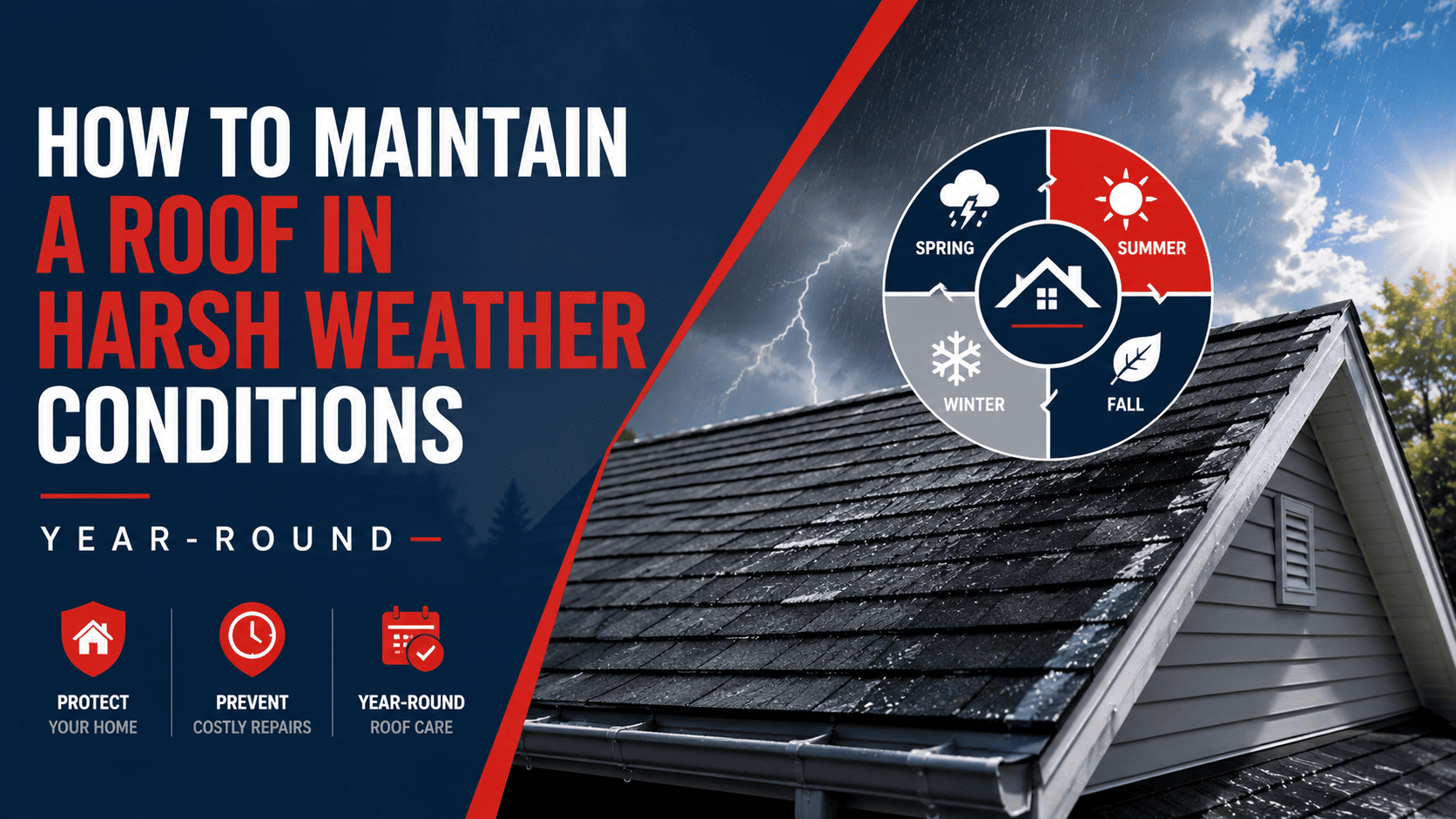
Knowing how to maintain a roof in harsh weather conditions can help protect your home from sudden roof leaks. Regular roof care can stop small problems from becoming expensive roof repairs. It can also help your roof last longer and prevent early roof replacement.
Harsh weather can arrive at any time. A February ice storm, an August hailstorm, heavy rainfall, or high winds can all test your roofing system. According to Climate Central, the U.S. recorded 23 billion-dollar weather and climate disasters in 2025, with total damages of $115 billion. Severe weather accounted for 21 of those events.
A strong roof needs more than luck. You need regular roof maintenance, clean drainage systems, timely repairs, and professional inspections. When you follow a year-round roof maintenance plan, you can protect your roof before harsh weather conditions create costly damage.
What Harsh Weather Conditions Can Do to Your Roof
Roofs usually do not fail in one major moment. Instead, harsh weather slowly weakens roofing materials over time. Extreme weather conditions, and extreme weather events can damage the roof surface, roof deck, roof structure, flashing, gutters, and roof penetrations.
Thermal expansion and contraction can loosen fasteners during hot and cold weather.
Intense UV exposure can dry asphalt shingles and sealants. Freeze-thaw cycles can widen small cracks. Meanwhile, wind-driven rain can enter through loose shingles, damaged flashing, or failed pipe boots.
Here are common weather conditions that can damage your roof:
- High winds and wind damage: High winds can lift shingles, loosen flashing, and create missing or damaged shingles. The National Weather Service explains that sustained winds of 40-50 mph can cause isolated wind damage.
- Hail damage: Hail can bruise roofing material beneath the surface. You may later notice granule loss, damaged shingles, or granule piles in gutters. Our guide on hail damage can help you understand what to check.
- Heavy rainfall: Heavy rainfall and wind-driven rain can expose weak flashing around chimneys, vents and skylights. This often causes roof and chimney leaks, leaks and water stains, and hidden damage.
- Snow and ice: Heavy snow, snow buildup, snow load, and ice dams can push water under shingles. Ice dam formation often leads to water intrusion, water damage, and winter damage.
- Extreme heat: Extreme heat, UV damage, and intense UV can dry out sealants, damaged flashing, pipe boots, and roof penetrations. Over time, this can cause cracked or missing shingles.
- Coastal weather: Salt air, coastal humidity, hurricane season, and severe weather can wear down roofing systems near the coast faster than many homeowners expect.
Warning Signs Your Roof Needs Attention
Most signs of roof damage begin quietly. You may first notice them inside your home, near gutters, or while looking at your roof from the ground. A simple visual inspection can help you spot problems early, but a professional roof inspection gives you a clearer answer.
Watch for these signs your roof needs attention:
- Water stains on ceilings, peeling paint, or mold on exterior walls may point to hidden leaks.
- A sagging roofline, soft roof decking, or a damaged roof can signal structural damage.
- Missing or damaged shingles, curling shingles, lifted shingles, loose shingles, cracked or missing shingles, and buckling shingles can expose the roof deck.
- Nail pops, damaged shingles, or granule piles in gutters may show that your roofing materials need roof repair.
- Clogged gutters, debris buildup, and poor drainage can trap water near roof valleys and roof penetrations.
- Moss and algae growth can hold moisture against the roof surface.
Small roof damage can become costly repairs when you wait too long. Therefore, inspect your roof after storms instead of hoping the problem goes away. Our team at DLV Roofing handles roof leaks, flashing repair, minor repairs, roof repairs, and emergency roof repair across residential and commercial properties. We are available 24 hours a day when the weather cannot wait.
Seasonal Roof Maintenance Checklist for Every Season
Seasonal roof maintenance helps you handle each season before it causes significant damage. A practical roof maintenance checklist gives you clear maintenance tasks for every season and helps you keep your roof ready for harsh weather.
Spring Roof Maintenance
Spring is the right time to inspect after winter. Start with a visual inspection from the ground, then schedule a professional inspection if you notice signs of damage.
Your spring roof maintenance tasks should include:
- Inspect your roof for winter damage, water damage, roof leaks, and damaged flashing.
- Check your roof for nail pops, buckling shingles, loose shingles, and granule loss.
- Clean gutters and clear gutters of leaves, twigs, and debris buildup.
- Check gutters and downspouts for drainage problems.
- Look at flashing around chimneys, vents and skylights for cracks or separation.
- Schedule a professional roof inspection before storm season begins.
Summer Roof Maintenance
Summer brings extreme heat, intense UV, heavy rainfall, and sudden severe weather. These conditions can weaken roofing material, especially asphalt shingles and exposed sealants.
During summer, maintain your roof by:
- Checking attic ventilation and proper attic ventilation.
- Watching attic temperatures for heat buildup and poor ventilation.
- Trimming tree branches before storms turn them into falling debris.
- Completing branch trimming where limbs touch or hang over the roof surface.
- Looking for algae growth, moss and algae growth, and roof damage around shaded sections.
- Inspecting pipe boots, skylights and sun tunnels, and roof penetrations.
Fall Roof Maintenance
Fall gives you an important chance to prepare for harsh winter weather. You should complete roof maintenance tasks before snow and ice arrive.
Your fall maintenance checklist should include:
- Gutter cleaning and gutter and downspout maintenance.
- Checking your gutter system and drainage systems.
- Removing debris from roof valleys and the roof field.
- Scheduling a comprehensive roof inspection.
- Completing timely repairs before winter.
- Preparing a winter-ready roof before major storms arrive.
A professional roofing contractor can also inspect before winter for damaged flashing, roof leaks, loose shingles, and roof structure concerns.
Winter Roof Maintenance
Winter roof care focuses on safety and quick action. Avoid walking on icy roofing systems. Instead, watch for warning signs from the ground and inside your home.
During winter, you should:
- Watch for excess snow, heavy snow, and snow buildup.
- Look for ice dams and prevent ice dams before meltwater reaches the attic space.
- Use a roof rake only when conditions are safe.
- Call a licensed roofer for snow load concerns, roof leak repair, or emergency roof repair.
- Inspect after every significant storm event when it is safe to do so.
Roof Care by Climate: Mountains, Coast, and Midwest
Roof protection needs to change from one climate to another. Western North Carolina, coastal South Carolina, and the Indianapolis metro all face different harsh weather conditions. That is why regular inspections and proactive roof maintenance should match the weather that affects your property.
| Climate Zone | Main Threat | Priority Maintenance | Inspection Timing |
| Western North Carolina mountains | Freeze-thaw cycles, snow, hail | Attic insulation, ice dam prevention, flashing seals | Late fall and early spring |
| Coastal South Carolina Lowcountry | Hurricane season, salt air, coastal humidity | Wind resistance, sealed roof deck details, algae control | Before hurricane season |
| Indianapolis metro | Ice storms, hail, high winds | Impact-resistant shingles, gutter capacity, roof decking checks | Spring and after storms |
If you live in the mountains, proper attic insulation and proper attic ventilation can reduce ice dam formation. If you live near the coast, roofing systems need stronger protection from salt air, hurricane season, and wind-driven rain. In the Midwest, impact-resistant shingles and regular roof inspections can help after hail and straight-line wind.
You can contact our Asheville roofing contractor team, our Charleston roofing company office, or our Indianapolis roofing contractors for a free, no-obligation assessment.
Attic Ventilation, Insulation, and Ice Dam Prevention
Proper attic ventilation helps protect your roof in both summer and winter. Good ventilation moves warm, moist air out of the attic space. It can lower attic temperatures, reduce heat buildup, and support the life of your roof.
Poor ventilation can cause problems in every season. In winter, warm attic air can melt snow near the ridge. The water can then refreeze at the eaves and create ice dams. In summer, trapped heat can damage asphalt shingles and shorten roof lifespan.
A healthy ventilation system should include:
- Proper attic ventilation with balanced intake and exhaust venting.
- Clear soffit baffles so attic insulation does not block airflow.
- Proper attic insulation near the eaves.
- Regular inspections for moisture, mold, and water intrusion.
- Fast repairs when you notice roof leaks or water stains.
According to ENERGY STAR, air sealing and attic insulation can save homeowners an average of 15% on heating and cooling costs. This work can also help prevent ice dams and protect your roof during a harsh winter.
Selecting Durable Roofing Materials for Severe Weather
Selecting durable roofing materials gives your roof better protection against severe weather. The best roofing choice depends on your climate, roof structure, budget, and the weather conditions your home faces each year.
Here are common roofing materials that work well in different conditions:
- Architectural asphalt shingles: Architectural asphalt shingles work well for many homes and can offer a strong balance of price, appearance, and roof lifespan.
- Impact-resistant shingles: These shingles can give better protection in locations with frequent hail damage and major storms.
- Metal roofing: Metal roofing can shed snow and water quickly. Standing seam metal is especially useful in areas with heavy snow and heavy rainfall.
- Concrete tiles and natural slate: Concrete tiles and natural slate can last a long time when the roof structure can support their weight.
- Cedar shake: Cedar shake offers a natural look, but it needs regular roof care and maintenance.
- Low-slope membrane systems: TPO, PVC, and EPDM are common for commercial roof systems and low-slope membrane applications.
The Insurance Institute for Business & Home Safety explains that a sealed roof deck can reduce water intrusion after roof damage. A strong roof deck, secure roof decking, and the right roofing materials can give your home better roof protection during extreme weather events.
DLV Roofing installs asphalt shingles, metal roofing, standing seam metal, copper, natural slate, composite slate and shake, cedar shake, and low-slope membrane roofing systems. We help you choose the right roofing option for your home or business.
What a Professional Roof Inspection Covers
Searching for a roof inspection near me only after you find a roof leak can lead to more repair costs. Regular roof inspections are a better way to find minor damage before it becomes significant damage.
A professional inspection should cover more than a quick look at shingles. Our comprehensive roof inspection includes:
- A full review of your roofing system and roof surface.
- A roof life expectancy estimate, so you can plan for the life of your roof.
- Debris cleaning across the roof field.
- Gutter cleaning, clean gutters, and gutter and downspout maintenance.
- Branch trimming and help to trim overhanging tree branches.
- Skylight cleaning for skylights and sun tunnels.
- Flashings inspection around chimneys, walls, vents, pipe boots, and roof penetrations.
- Seam and expansion joint inspection for commercial roof systems.
- Checks under shingles for hidden damage, water intrusion, and damaged roof decking.
- Roof drain checks for commercial roofing and low-slope roofing systems.
Our roof inspection checklist can help you understand what a complete inspection should include. You can also use our roof maintenance program for routine maintenance, preventive roof maintenance, and proactive maintenance throughout the year.
The program ranges from a Bronze plan with 1 annual visit to a Platinum plan with 4 visits. We help you select a service schedule that fits your roof, climate, and property needs.
Storm Damage, Insurance Claims, and Roof Repairs
Storm damage can look minor at first, but hidden damage often gets worse after the storm. Hail, high winds, heavy rainfall, and falling tree branches can cause roof damage that is not easy to see from the ground.
After storms, take clear photos and keep your records. This can help with insurance claims and an insurance claim review. You should also:
- Inspect after major storms when it is safe.
- Document signs of roof damage and signs your roof needs repair.
- Keep receipts for minor repairs and timely repairs.
- Request a professional damage assessment before the insurance adjuster arrives.
- Avoid costly repairs by dealing with damaged shingles, roof leaks, and flashing repair early.
- Review wind damage information if wind affected your property.
A documented maintenance history can support insurance claims because it shows that you completed regular roof maintenance instead of ignoring the roof. However, coverage always depends on your policy, deductible, exclusions, and the documented cause of damage.
DLV Roofing can help you document storm damage, understand repair needs, and prepare for the insurance claim process. We do not replace your insurer or adjuster, but we can help you see the full condition of your roof before important decisions are made.
Commercial Roof Maintenance in Extreme Weather Conditions
Commercial roofing needs its own maintenance plan. A commercial roof often has a low slope, which means water does not move away as quickly as it does on a steep residential roof. Property managers need proactive roof maintenance because even a small seam failure can cause leaks and water damage below.
Commercial roof maintenance tasks should include:
- Clearing roof drains, scuppers, and drainage systems.
- Checking TPO, PVC, and EPDM membrane seams.
- Completing seam and expansion joint inspection.
- Checking flashing around HVAC curbs, vents, and other roof penetrations.
- Looking for ponding water, roof leaks, and damaged flashing.
- Scheduling professional inspections after severe weather.
- Protecting the manufacturer warranty through documented preventive roof maintenance.
Our commercial roof winter checklist can help property managers prepare their buildings for winter damage. Businesses across our service areas can also rely on our commercial roofing team for planned maintenance.
When repairs cannot protect an aging system, our roof replacement team can plan the work around your business hours.
Give Your Roof the Year-Round Care It Deserves
A roof that performs well through harsh weather does not happen by chance. It happens when you protect your roof with routine maintenance, inspect my roof requests at the right time, and a clear plan to prevent costly repairs.
Knowing how to maintain a roof in harsh weather conditions means you check your roof before storm season, inspect after significant storm events, keep gutters clear, and complete roof repair before small problems grow. This approach can extend a roof’s lifespan, reduce expensive repairs, and help protect your home from structural damage.
Since 1999, DLV Roofing has served residential and commercial customers across Western North Carolina, coastal South Carolina, and the Indianapolis metro. We provide free estimates, a 5-year workmanship warranty on full roof replacements, and a licensed roofer for your roofing needs.
Call our Asheville office at 828-654-0212 or contact DLV Roofing today. Let our professional roofing contractor help you keep your roof ready for every season.
Frequently Asked Questions
1. How Often Should a Roof Be Inspected in a Harsh Climate?
Twice a year is a good baseline. Schedule regular inspections in spring and fall, then inspect after every significant storm event involving hail, high winds, heavy snow, or major storms. Homes near trees, mountains, or coastal areas may need 3 or 4 professional inspections each year.
2. Can Roof Maintenance Really Extend a Roof’s Lifespan?
Yes. Regular roof maintenance can help extend a roof’s lifespan because it finds roof leaks, loose shingles, clogged gutters, and minor damage early. Proactive roof maintenance can also protect the roof deck and prevent water damage that often leads to early roof replacement.
3. What Causes Ice Dams and Can They Be Prevented?
Ice dams form when warm air enters the attic space and melts snow near the top of the roof. The water then freezes near colder eaves. Proper attic insulation, good ventilation, and safe snow removal can reduce the risk. A licensed roofer can also inspect the roofline and identify the cause.
4. Does Homeowners Insurance Cover Storm Damage to a Roof?
Many policies cover sudden storm damage from wind, hail, or falling tree branches. However, policies often do not cover normal wear, poor maintenance, or old roofing materials. Read your policy carefully and keep inspection reports, photos, and repair records for insurance claims.
5. Is Professional Roof Maintenance Worth the Cost?
For many homes and businesses, it is. A professional roof inspection can find hidden leaks, damaged flashing, and drainage problems before they create costly damage. Regular service can also help protect a manufacturer warranty and reduce future roof repair costs.