Has a roofer or home inspector told you that your chimney “needs a cricket,” and now you are wondering what it will cost? Many homeowners first hear the word after a water stain shows up on the ceiling near the fireplace. Others find it in an inspection report, with no price and no explanation.
The cost to install a chimney cricket usually falls between $700 and $1,300, according to This Old House. That price covers a framed and flashed cricket. If the crew adds it during a roof replacement, the price can drop.
On the other hand, stone chimneys, steep roofs or copper builds can cost thousands. Below, DLV Roofing explains the prices, what drives them and how to compare quotes with confidence.
What a Chimney Cricket Is and Why Roofs Need One
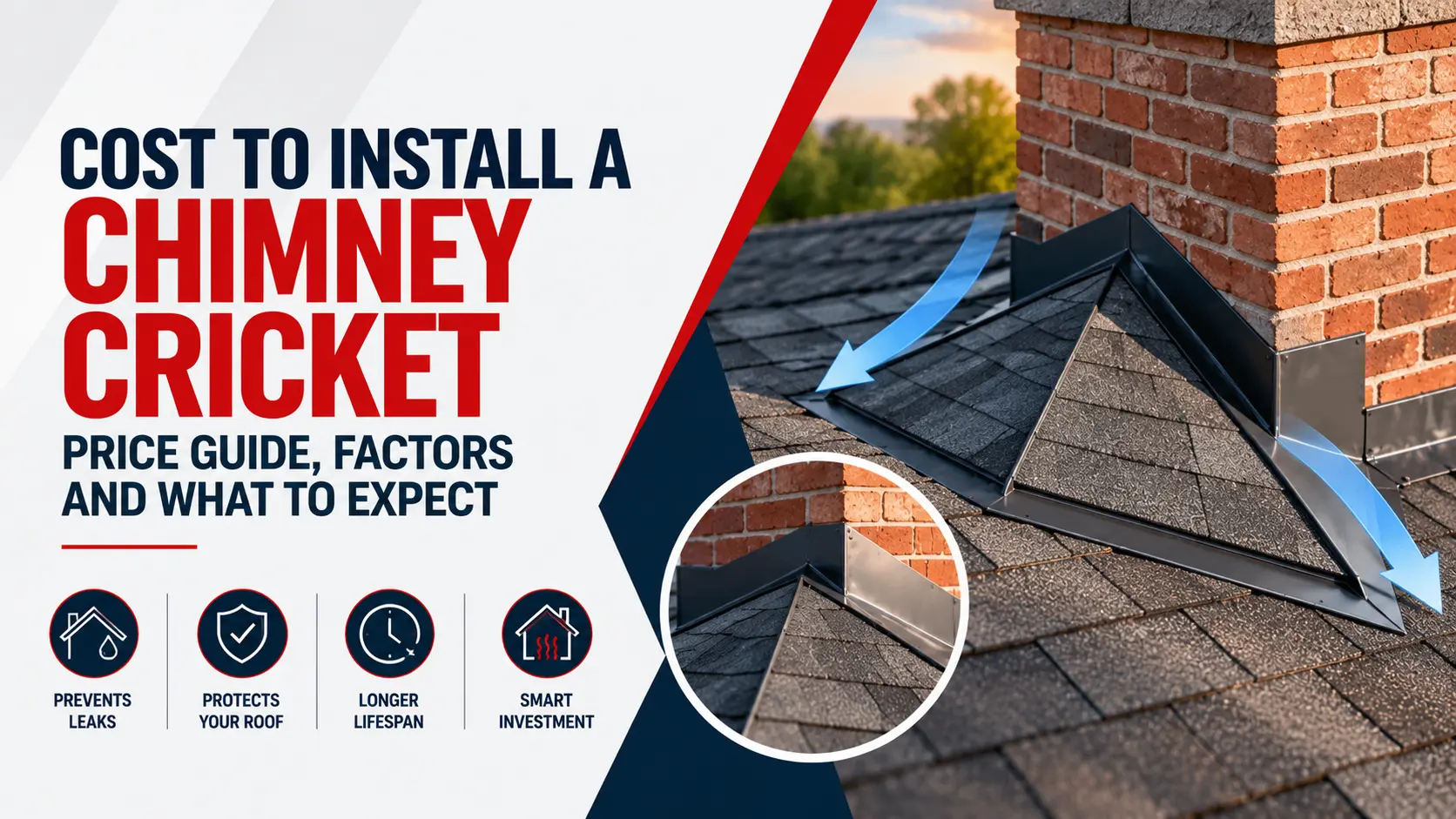
A chimney cricket is a small, peaked roof section built on the uphill side of a chimney. It splits water running down the roof and sends it around both sides of the chimney. As a result, rain, snow and leaves do not collect against the back of the brick.
Roofers also call it a chimney saddle, and the 2 terms mean the same thing on most homes. So, what are roof crickets doing that flashing alone cannot? A wide chimney on a sloped roof acts like a dam.
Water hits the back face, slows down and pools, which slowly wears out the flashing seal behind it. A roof cricket at the chimney removes that flat catch area. This keeps the back flashing drier, so it can last longer.
In short, a cricket for roofing is a detail that steers water, not a decoration. You can find a cricket in roof designs of several kinds, too. The most common is a cricket on a roof for a chimney.
However, roofers also build them behind large skylights and on low-slope roofs. There, crickets help direct water toward drains.
Chimney Cricket Cost at a Glance
Prices vary by region, roof type and the condition of the chimney. This table shows common jobs and published price ranges.
| Job Type | Typical Price Range | What Is Usually Included |
| Cricket added during a full roof replacement | Lower end of the market, with some roofers quoting $300 to $700, as reported by Yahoo | Framing, sheathing, underlayment and flashing while the roof is already open |
| Stand-alone cricket on an existing shingle roof | $700 to $1,300 per This Old House | Shingle removal around the chimney, new cricket, new flashing, re-shingling |
| Cricket plus a full chimney flashing rebuild | Add about $300 to $800 for the flashing, per This Old House | New step, apron and counter flashing on all sides of the chimney |
| Complex retrofit (stone chimney, steep roof, copper) | Can reach $3,000 to $6,000, as reported by Yahoo | Masonry work, custom metal, extra safety setup and labor |
What Drives Chimney Cricket Installation Cost
Every chimney is different, so quotes for chimney cricket installation rarely look identical. These factors move the price up or down.
Chimney Width and Roof Pitch
A wider chimney needs a wider cricket, while a steeper roof needs a taller one. More lumber, sheathing and flashing all add to the bill. Steep roofs also require extra safety equipment and slower work, which adds to labor time.
Retrofit vs. Reroof Timing
The cost to install chimney cricket framing and flashing on a finished roof is higher. That’s because the crew first has to tear out shingles around the chimney. If your roof needs a full roof replacement within the next few years, combining the work usually saves money.
Covering Material
Code allows the cricket covering to be sheet metal or of the same material as the roof. Here is how your choice affects price:
- Asphalt shingles: These offer the most budget-friendly option. If the color is available, they also match the rest of your roof.
- Galvanized steel or aluminum: These metals offer a solid mid-range choice because they shed water quickly. They also work well on metal roofs.
- Copper: This is the most expensive option, but it looks good and lasts for decades. That is why homeowners often choose it for historic homes or slate roofs.
Chimney Type and Condition
A brick chimney usually makes the work more straightforward, while a real stone chimney often costs more. Many crews chip out stone so they can fit new flashing tightly against the block underneath. If the mortar joints or chimney crown have cracks, those masonry repairs get added to the quote as well.
Hidden Damage Under the Shingles
Years of pooled water behind a chimney can rot the roof decking below it. A roofer cannot always see this until the shingles come off. A fair quote should list a per-sheet price for replacing soft decking, so you avoid surprises later.
DLV Roofing’s estimators measure the chimney width and roof pitch on site. This means your price is based on your actual roof, not a guess.
When Building Code Requires a Chimney Roof Cricket
Section R1003.20 of the International Residential Code requires a cricket when the chimney is wider than 30 inches parallel to the ridge. The rule applies only if the chimney does not intersect the ridgeline. A typical single-flue chimney is narrower, while many double-flue and fireplace chimneys are wider.
The same code section sets the cricket height based on roof slope and chimney width (W):
| Roof Slope | Cricket Height |
| 12:12 | 1/2 of W |
| 8:12 | 1/3 of W |
| 6:12 | 1/4 of W |
| 4:12 | 1/6 of W |
| 3:12 | 1/8 of W |
For example, a 36-inch chimney on a 6:12 roof needs a cricket about 9 inches tall at the chimney. A cricket built too short can still hold water, which is one of the most common build mistakes roofers find.
Your local building department decides which code edition applies. That is why your roofer should confirm the local rule before pricing the job.
Signs Your Chimney Needs a Cricket
Even if code does not require one, a cricket can still be the right fix. Watch for these signs:
- Ceiling or wall stains: A brown stain near the fireplace often points to water getting past the back flashing. Stains in the attic around your chimney can mean the same thing.
- Debris piling up: Leaves, pine needles and shingle granules can collect behind the chimney. If they remain there, they trap moisture against the flashing.
- Snow and ice behind the chimney: Snow may stay packed against the back face after the rest of your roof clears. If so, water is likely collecting there too.
- Rusted or lifted flashing: Metal that corrodes or pulls away from the brick shows that water has been sitting against it.
Weather across our service areas makes these signs more common. Around Asheville, heavy mountain snow can pack behind chimneys on steep roofs. Because of this, a roofing contractor in Asheville often checks the cricket during fall inspections.
Coastal storms bring wind-driven rain to Charleston. A roofing company in Charleston also sees flashing failures when water pools behind wide chimneys. In Indianapolis, freeze-thaw cycles and ice dams make the back of the chimney a frequent leak point.
Many homeowners seeking roof repair in Indianapolis ask about crickets for this reason. If you already have a roof leak in heavy rain, the chimney is among the first places DLV Roofing checks.
Chimney Cricket Installation: What the Job Involves
Knowing the steps helps you understand where the money goes. Chimney cricket construction on an existing roof usually follows this order:
- Remove shingles around the chimney: The crew strips the area behind and beside the chimney down to the decking. Then, they check the exposed wood for rot.
- Frame the cricket: A ridge board and 2 sloped rafters form the peak. The crew sizes this frame to match the chimney width and roof slope.
- Add sheathing: Plywood panels cover each side of the cricket. These panels create a solid surface.
- Apply ice and water shield: A self-adhered membrane covers the entire cricket. It also laps onto the chimney and surrounding roof.
- Install flashing: Apron flashing goes across the back of the chimney, and step flashing runs up each side of the cricket. The crew then sets counter flashing into a cut groove, called a reglet, in the masonry.
- Cover the cricket: The crew installs shingles or sheet metal and ties the covering into the existing roof. This connection lets water flow around the chimney.
Most roof cricket design pictures show this peaked shape clearly. Valleys on each side carry water past the chimney corners.
DLV Roofing has installed shingle, metal, slate and copper roofs since 1999. That experience means we can build a cricket that matches your existing roof.
Is a Chimney Cricket Worth the Cost?
For most wide chimneys, a cricket is worth the cost. Years of slow leaks can leave you with rotted decking, stained drywall and damaged masonry. Compared with those repairs, the cost to install chimney cricket framing is small.
That said, timing matters if your chimney is not leaking. If you plan to replace the roof within a couple of years, adding the cricket then often makes better financial sense. However, if water already gets inside, waiting allows the damage to grow.
If you are unsure which situation applies, DLV Roofing can inspect the chimney. We can then tell you honestly whether to fix it now or wait.
Does Insurance Pay for a Chimney Cricket?
Insurance rarely pays for a cricket as an upgrade on its own. Code upgrade coverage may help, though, if storm damage leads to a covered roof replacement that requires a cricket.
According to United Policyholders, this coverage usually equals a percentage of your dwelling limit, typically 10%, 25%, or 30%. Before your insurer settles the claim, ask whether your policy includes this coverage.
How to Read a Chimney Cricket Installation Cost Quote
A single price without details makes it hard to know what you are paying for. Before you sign, check that the quote covers these points:
- Line items: The quote should separate the cricket, the flashing and any other repairs. That way, you can compare the work across bids.
- Counter flashing method: The roofer should set counter flashing into a cut reglet in the brick, rather than caulking it to the face.
- Stone or masonry work: If your chimney has stone, the quote should say whether the crew will remove and reset it for new flashing.
- Warranty: Ask how long the contractor covers the workmanship.
At DLV Roofing, our free estimates spell out each part of the job. Roof replacements come with our 5-year workmanship warranty. Our roof maintenance plan also includes chimney flashing checks, so we can catch small problems early.
Get a Clear Chimney Cricket Price From DLV Roofing
The cost to install chimney cricket protection depends on your chimney, your roof and whether a reroof is coming up. Most stand-alone jobs fall between $700 and $1,300, while adding the work during a replacement keeps the price lower. Proper sizing, a full membrane wrap and counter flashing set into the masonry are what keep the back of your chimney dry for years.
If water already gets inside, do not wait for the stain to spread. DLV Roofing serves homeowners across Western North Carolina, coastal South Carolina and Indianapolis. Our team can measure your chimney and give an honest chimney cricket installation price.
Request a free estimate for roof and chimney leak repairs today.
FAQs About Chimney Cricket Cost
1. How Much Does a Roof Cricket Cost Compared With a Chimney Cricket?
Roof cricket cost depends on size and location on the roof. Other crickets in roofing include a small cricket behind a skylight or a roof cricket between two gables. These often cost about the same as a chimney cricket.
Large crickets on flat commercial roofs are priced by area and materials instead.
2. Can a Cricket Be Added Without Replacing the Whole Roof?
Yes, the crew removes shingles around the chimney, builds and flashes the cricket, then weaves new shingles into the existing roof. It does cost more than adding it during a reroof, because of the extra tear-out and shingle matching.
3. How Long Does Chimney Cricket Installation Take?
A crew often finishes a stand-alone cricket on a typical shingle roof in a day, depending on the weather. Stone chimneys, steep roofs, copper work or rotted decking can add more time.
4. Will a Cricket Stop an Existing Chimney Leak?
A cricket stops a leak only if water pooling behind the chimney causes it. Cracked crowns, worn mortar joints and failed side flashing can also let water in. That is why a roofer should check the whole chimney before recommending a cricket.
5. Does Every Chimney Need a Cricket?
Code requires a cricket if the chimney is wider than 30 inches parallel to the ridge and does not meet the ridgeline. Narrow chimneys and chimneys at the ridge usually do not need one. A cricket can still help those chimneys if they collect debris or have leaked before.